Wittenstein 360
A 360 VR time machine ride for Timecenter Wittenstein in Estonia, synced to a motion simulator as visitors fly through the 1800s.
01
The Brief
Timecenter Wittenstein, a museum in the Paide Order Castle in Estonia, wanted an actual time machine ride, not just a video on a screen. Motor OÜ built a motion simulator cockpit, and we made the matching 360 cinematic, a flight through inventions and events from the 1800s, with the seat's movement synced to what visitors see. Any mismatch between what you feel and what you see causes motion sickness instead of wonder, so the two had to line up closely.
Fig. 01 · 360
Flying past an army of toy soldiers in the 'Napoleon's Reign' scene.
Fig. 02 · 360 video
The cockpit approaching a cluster of lights further along the route.
02
My Approach
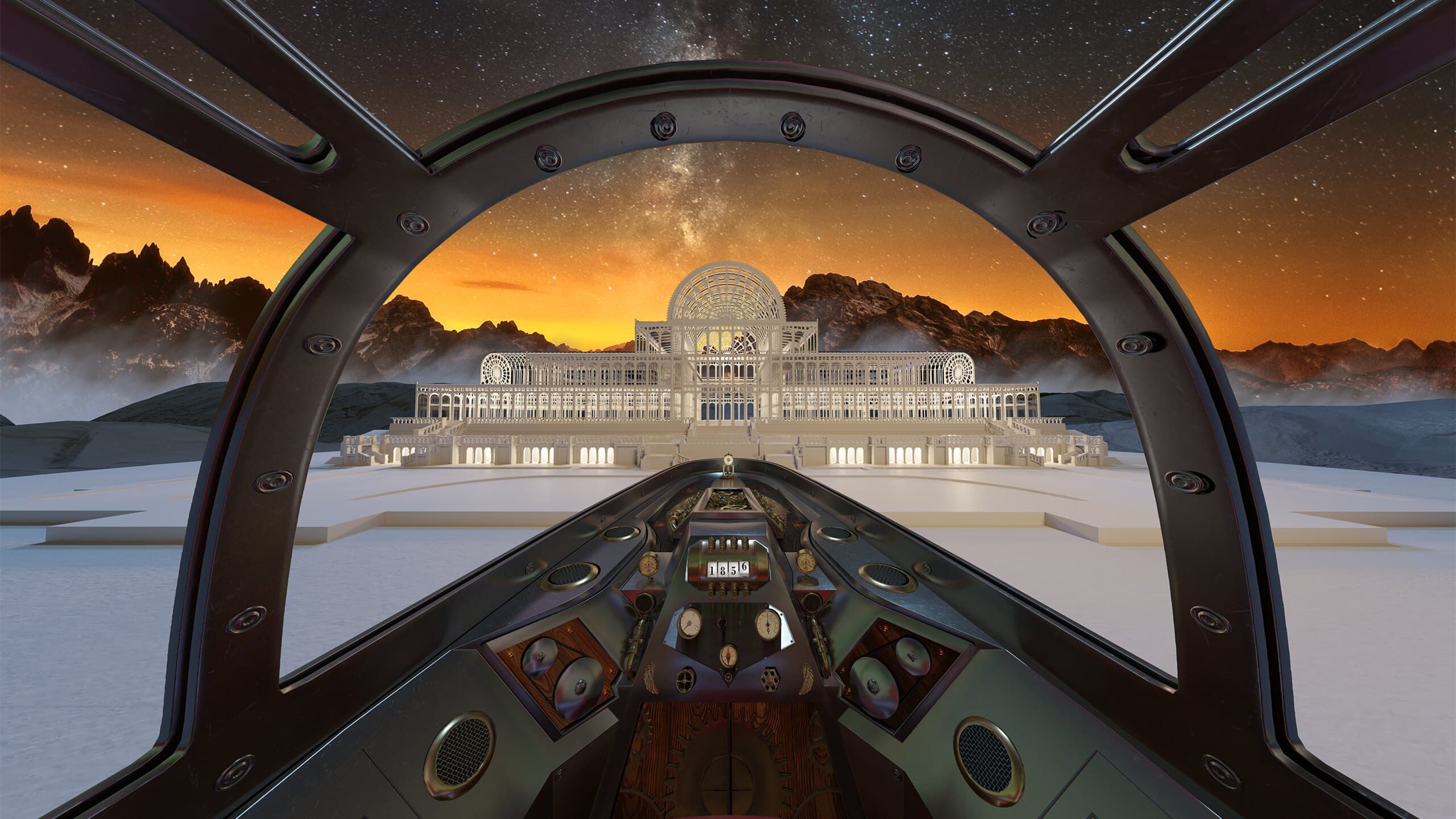
I modeled and animated the historical scenes in Blender and rendered the ride as a 360 cinematic in Cycles. The camera path needed the most care. I built it around the simulator's physical range and timing, so every acceleration, turn and drop you feel matches what you see. A colleague took my exact camera track into After Effects to add holographic captions that move with the scene. I also did the sound design, giving each invention its own sound alongside the visuals and the motion of the seat.
Fig. 03 · 360
The Crystal Palace, its glass and iron lit to stand out from the landscape.
03
The Result
The finished ride takes visitors through the 1800s in a motion simulator cockpit, with bilingual holographic captions along the way. The footage was also cut into flat and social versions for the museum's marketing.
Fig. 05 · 360
Holographic portraits mark the Lewis and Clark Expedition, captioned in Estonian and English.
04
Outcome
The ride is a permanent part of Timecenter Wittenstein in Paide. It was the first time my camera had to answer to a physical machine instead of a screen, and it changed how I approach camera animation whenever hardware is involved.
Fig. 06 · 360 video
360 from the cockpit, approaching the steam locomotive.
03 / About
Concept first, medium second
I'm Ramon, a multimedia designer based in Eindhoven. Projects start with a problem: what the thing has to do, and how someone should move through it. The answer has been a 360 film, a VR walkthrough, an explainer animation, a configurator and an AI training platform.
My part is 3D, design and code: modelling and lighting in Blender, interface and motion in XD/Illustrator and After Effects, plus the build in PlayCanvas or Next.js.