Alimak
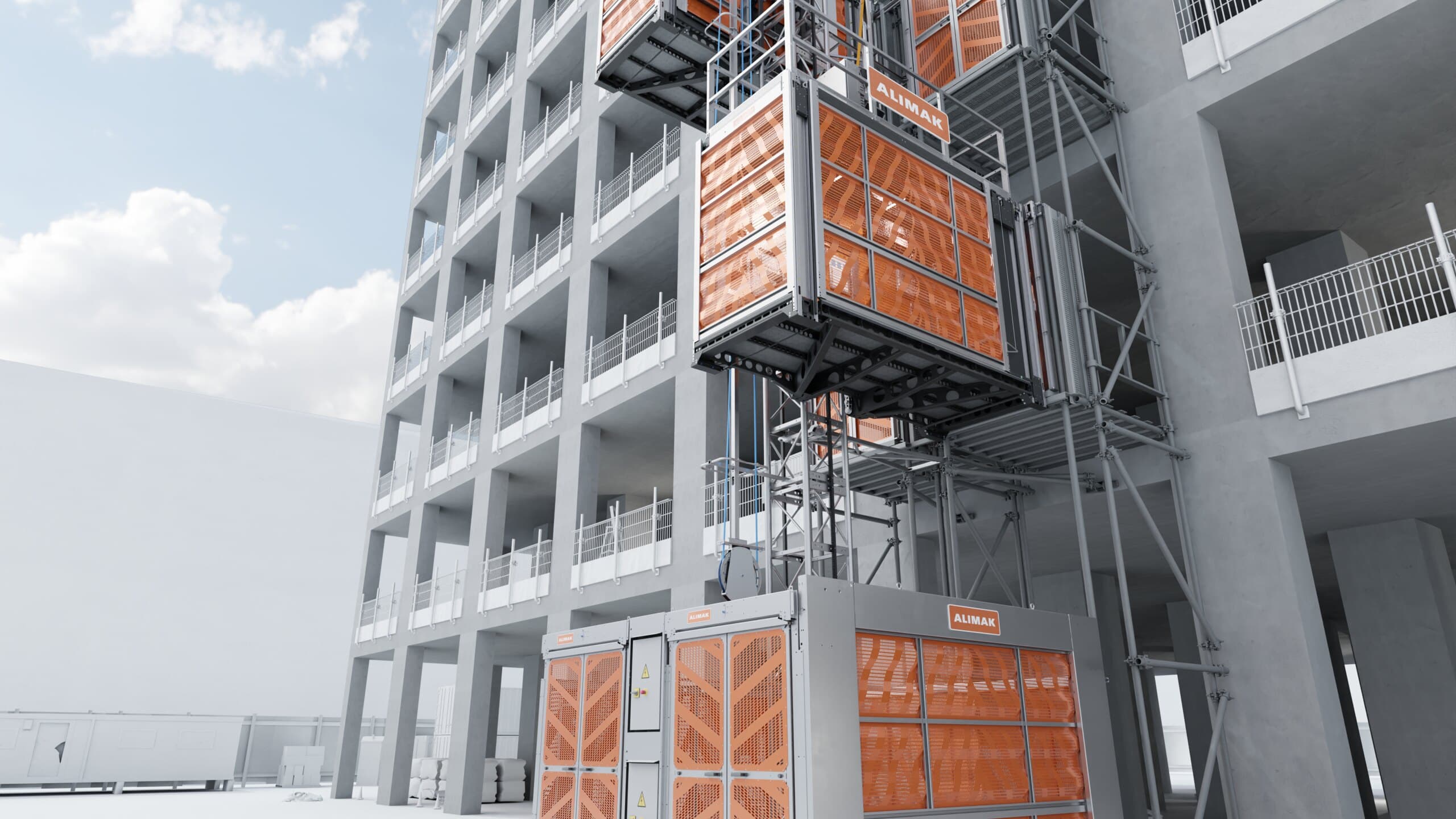
Photorealistic 3D scenes and 360 renders for an interactive product tour of Alimak's industrial construction hoists.
01
The Brief
Alimak builds industrial construction hoists. They wanted an interactive 360 product tour of their Scando 650A for marketing, sales and e-learning, with hotspots and animations highlighting specific parts. The starting point was raw CAD from the manufacturer, and every measurement had to match the real machine.
Fig. 02 · 360
360 view of the hoist at the building corner, at full height.
02
My Approach
I did all the 3D work in both phases, and a colleague built the tour in Pano2VR. The CAD files held thousands of components, many of them internal parts the camera would never see. I went through the files carefully, removing what would never be seen without leaving gaps in what would. No textures came with the files, so I built every material from scratch in Blender, from the metal finishes to the rubber seals and painted panels. The panoramas were heavy to render, so I turned the office PCs into a small render farm to bring turnaround times down.
03
The Result
The project produced two tours. Phase 1, the Scando 650A shown here, is public on Alimak's website. Phase 2 covers six models in one shared environment I adapted for each machine, and is used internally for sales and e-learning.
Fig. 04 · 360
360 view of the construction site, with the hoist along the building.
Fig. 05 · 360
360 close-up of the mast, with the building interior behind it.
04
Outcome
The client was impressed by the realism and detail, which is what brought them back for phase 2. For me, the main takeaway was learning how to work with industrial CAD data. Knowing what to keep and what to strip out is something you only really learn by doing it.
03 / About
Concept first, medium second
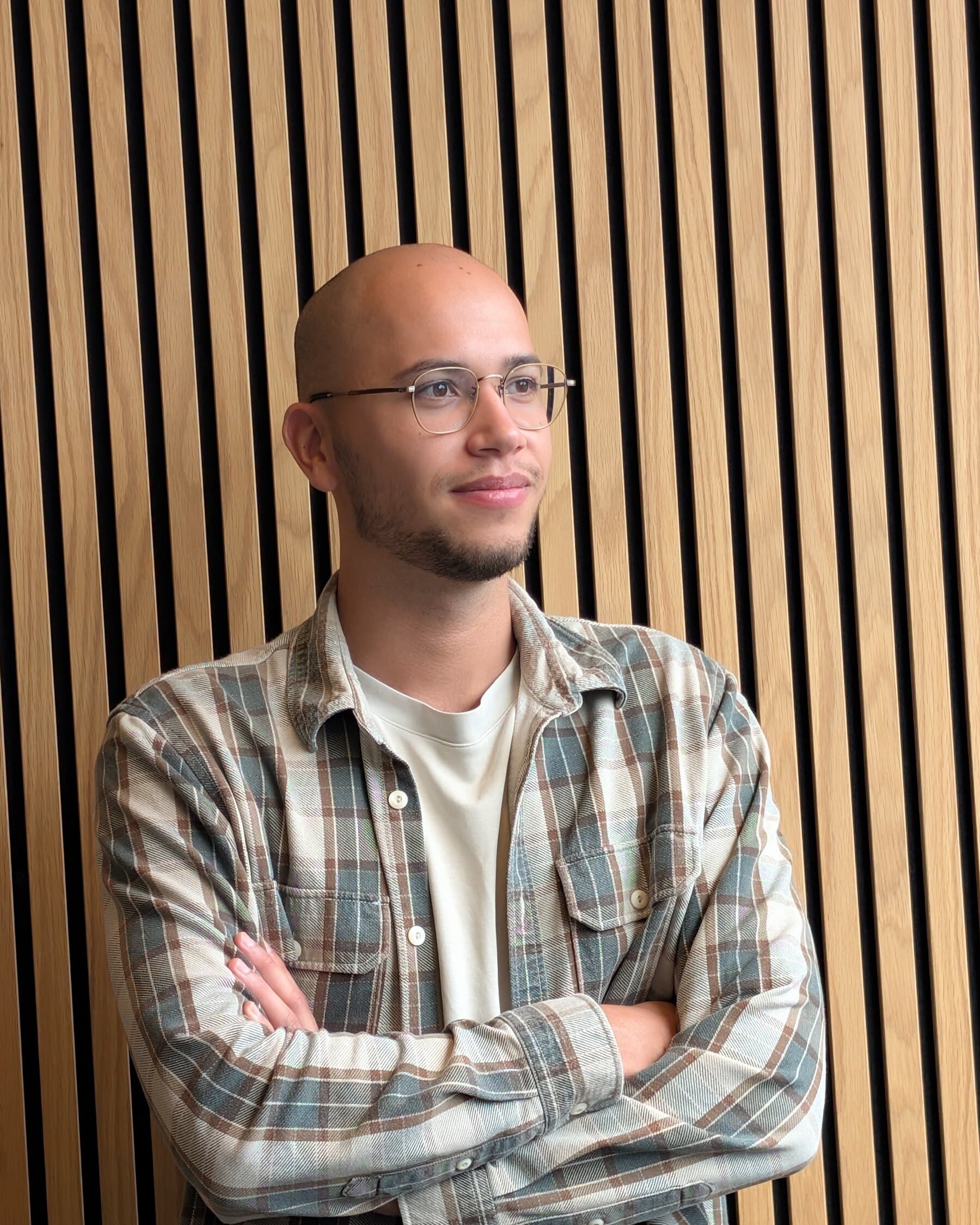
I'm Ramon, a multimedia designer based in Eindhoven. Projects start with a problem: what the thing has to do, and how someone should move through it. The answer has been a 360 film, a VR walkthrough, an explainer animation, a configurator and an AI training platform.
My part is 3D, design and code: modelling and lighting in Blender, interface and motion in XD/Illustrator and After Effects, plus the build in PlayCanvas or Next.js.