Ontrafel Franeker
A web-based escape room where kids help Eise Eisinga find the lost planets of his planetarium, racing the clock for real museum tickets.
01
The Brief
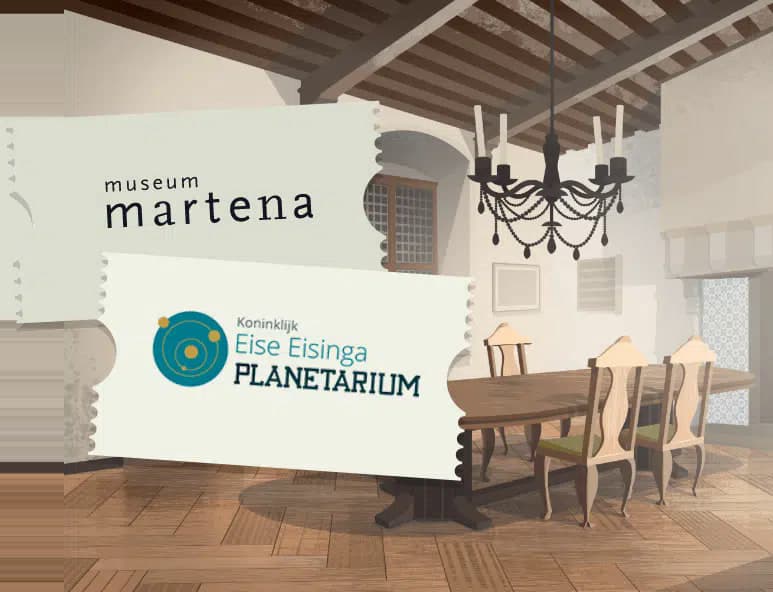
The Eise Eisinga Planetarium in Franeker is the oldest working planetarium in the world, built into the ceiling of a canal house in the 18th century. To get kids curious before they visit, the museum asked for an online escape room for 6 to 12 year olds, playable at home or at school. Finish within 15 minutes and you win real tickets to the Planetarium and Museum Martena.
Fig. 02 · Video
Eise Eisinga explains that his planets have gone missing.
02
My Approach
This was my first PlayCanvas project. A colleague did the visual design and I built the game, and we worked out the story and puzzles together. Kids play as Sara or Tim and explore 9 locations around Franeker to recover 6 lost planets. Each planet sits behind its own puzzle, like chasing a character, rotating shields at the town hall or lighting a torch in the tunnels. At the end, you drag all six back onto the planetarium ceiling. Dialogue changes based on what you've found, and hints kick in when you get stuck.
03
The Result
The finished game is a Dutch point-and-click escape room that runs in the browser, ending in a real voucher for anyone who finishes in time.
04
Outcome
The game is still live and in use. It's also the reason PlayCanvas became the go-to engine at Enversed, for me and for the rest of the media team.
Stills
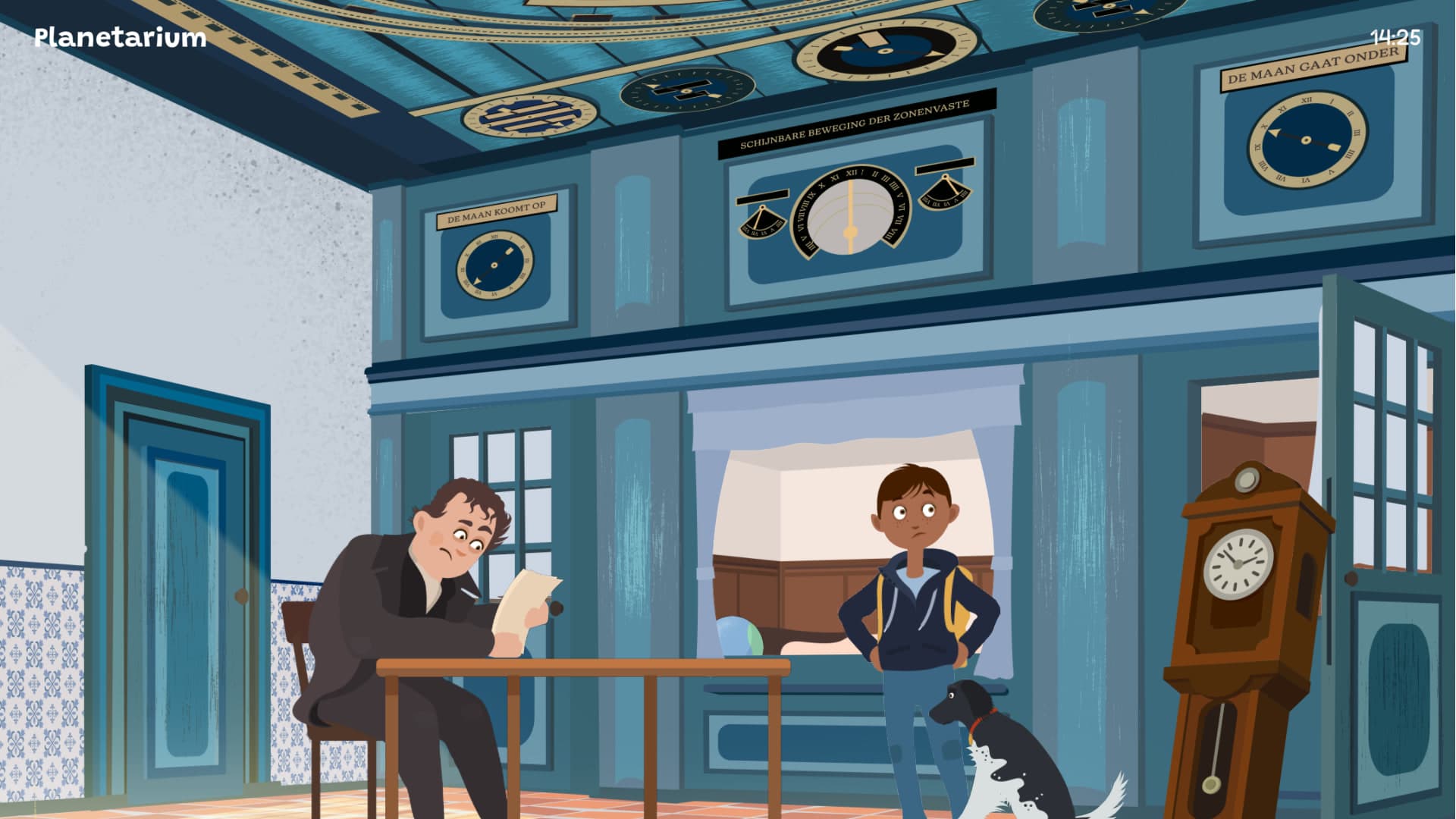
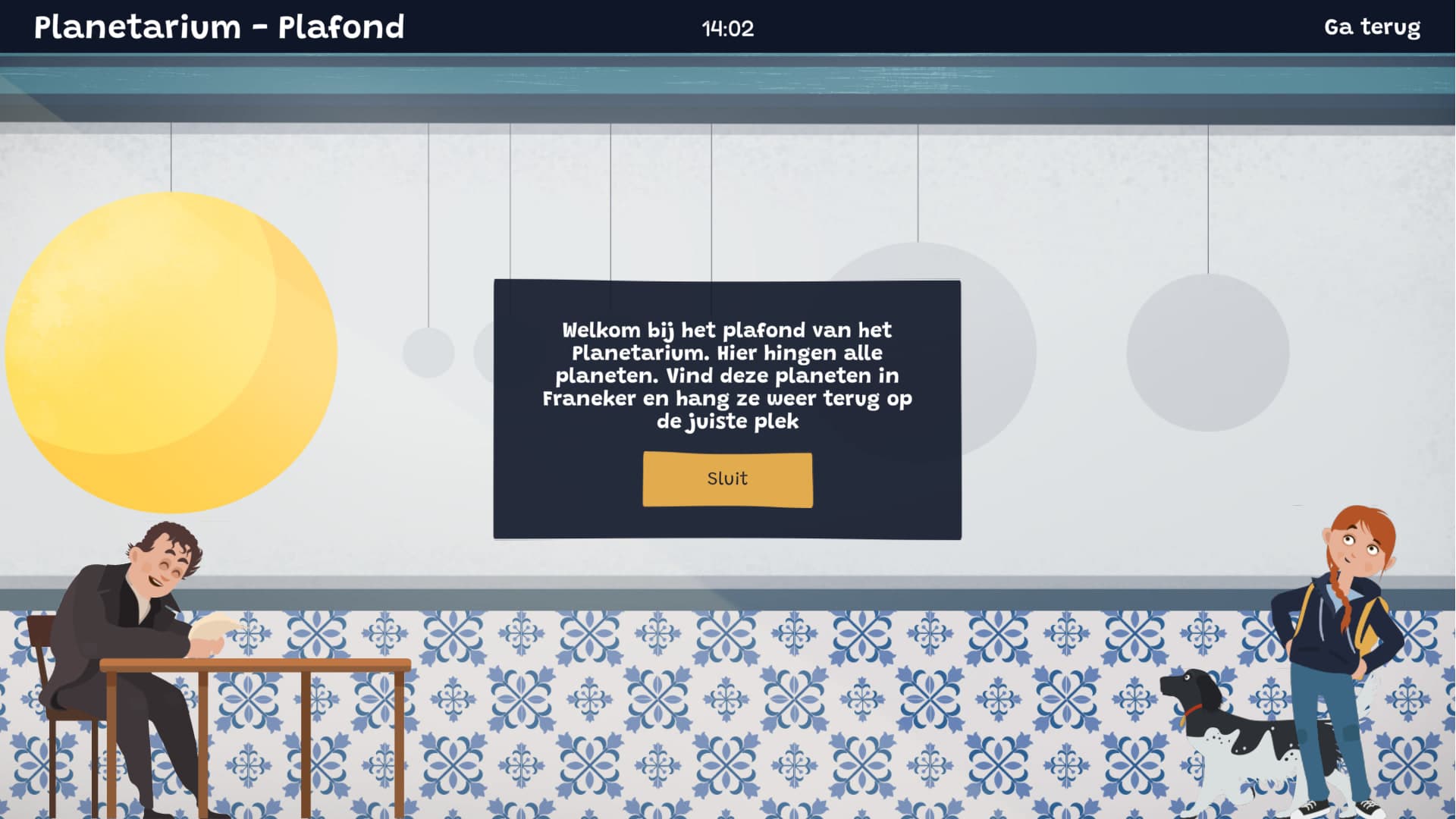
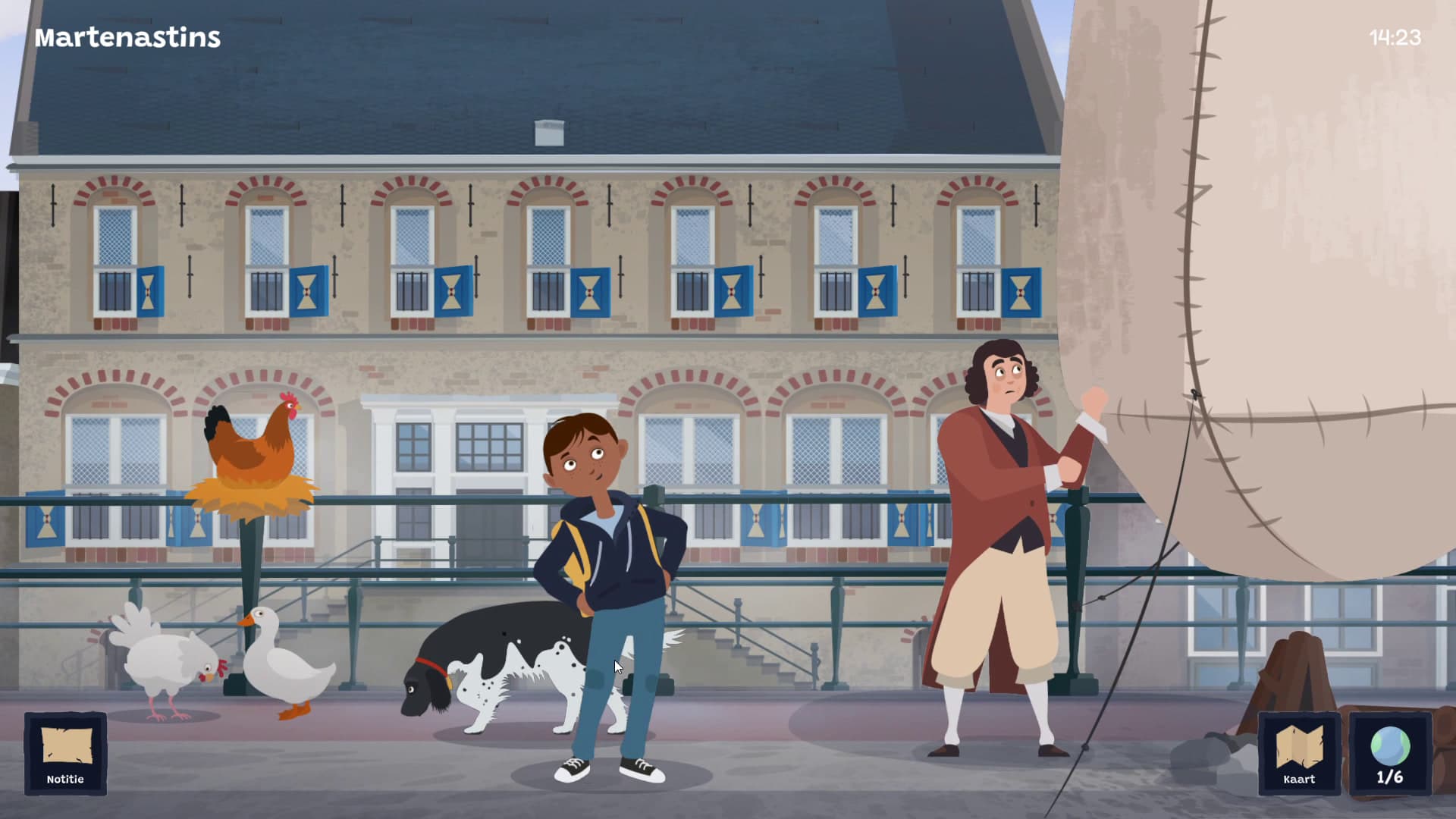
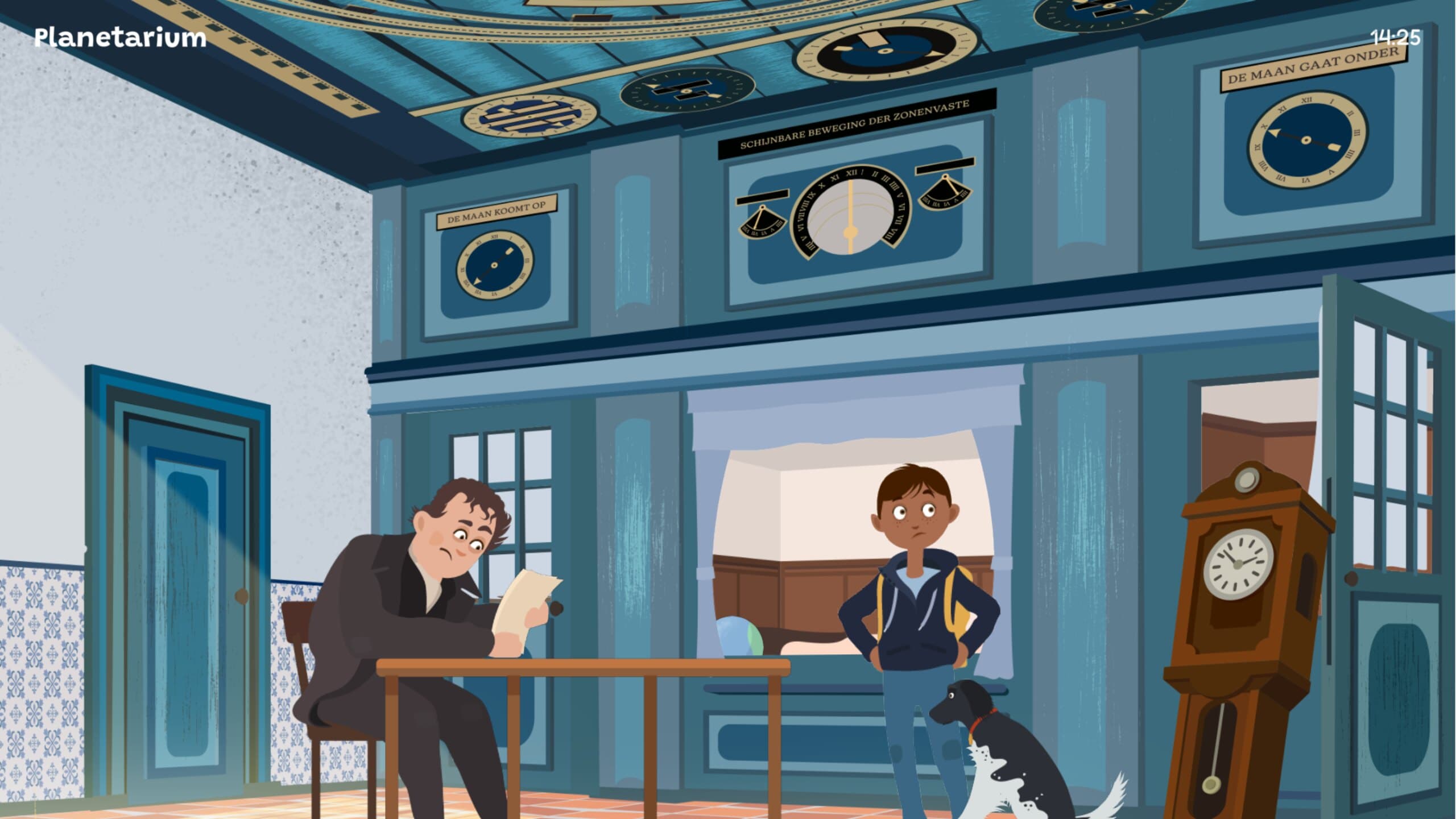
Inside the Planetarium, under Eisinga's real ceiling mechanism.

03 / About
Concept first, medium second
I'm Ramon, a multimedia designer based in Eindhoven. Projects start with a problem: what the thing has to do, and how someone should move through it. The answer has been a 360 film, a VR walkthrough, an explainer animation, a configurator and an AI training platform.
My part is 3D, design and code: modelling and lighting in Blender, interface and motion in XD/Illustrator and After Effects, plus the build in PlayCanvas or Next.js.