Klinisch Redeneren
VR simulation for nursing students to practice clinical decision-making in a real hospital scenario.
01
The Brief
Summa College's School for Care and Welfare wanted to make clinical reasoning lessons more interactive and student-driven. The subject, clinical reasoning, is a structured method nursing students use to observe a patient, identify what is wrong, decide how to intervene, and hand over to the next caregiver. Teaching it through classroom roleplay works, but it is hard to standardize and puts the teacher in the center rather than the student.
The ask was a VR scenario that would put students directly inside the decision-making process: caring for a real patient in a hospital room, choosing what questions to ask, what equipment to check, what medication to administer, and how to hand over to the physician. The scenario had to be clinically accurate and playable on both desktop and a VR headset without installing anything.
Fig. 02 · Video
A close-up of the medication device: selecting the ampoule and dialing in the correct perfusor rate.
02
My Approach
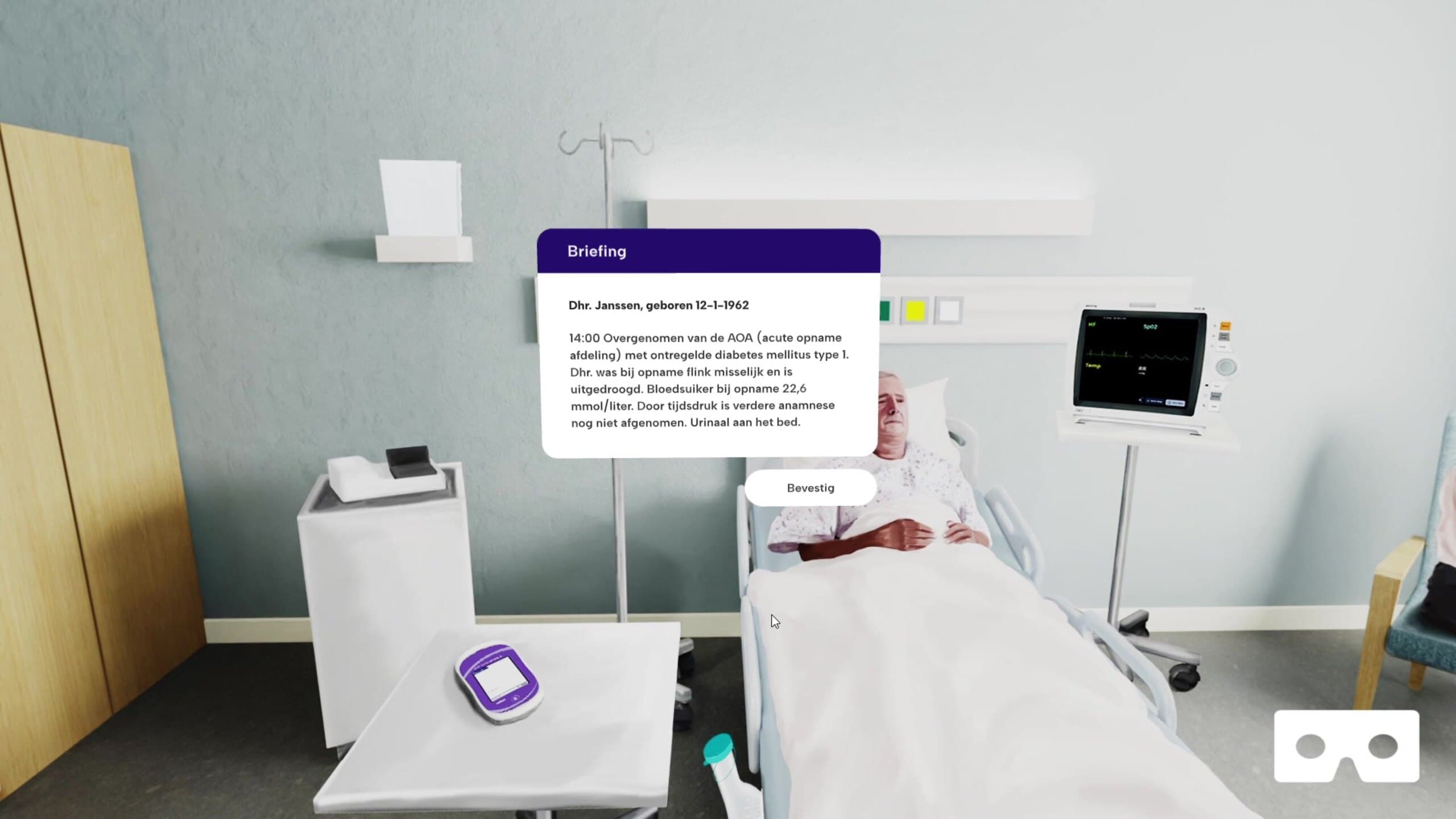
The simulation runs entirely in the browser with WebXR support. The environment is a single hospital room built from 21 numbered 360-degree cubemap skyboxes. Swapping skyboxes is how the narrative advances: the patient asleep versus awake, the doctor walking in, a colleague arriving for a medication check. Each transition is instant and there is no scene loading at all.
The gameplay follows the actual clinical reasoning steps taught at Summa. Each step maps to a distinct interactive system:
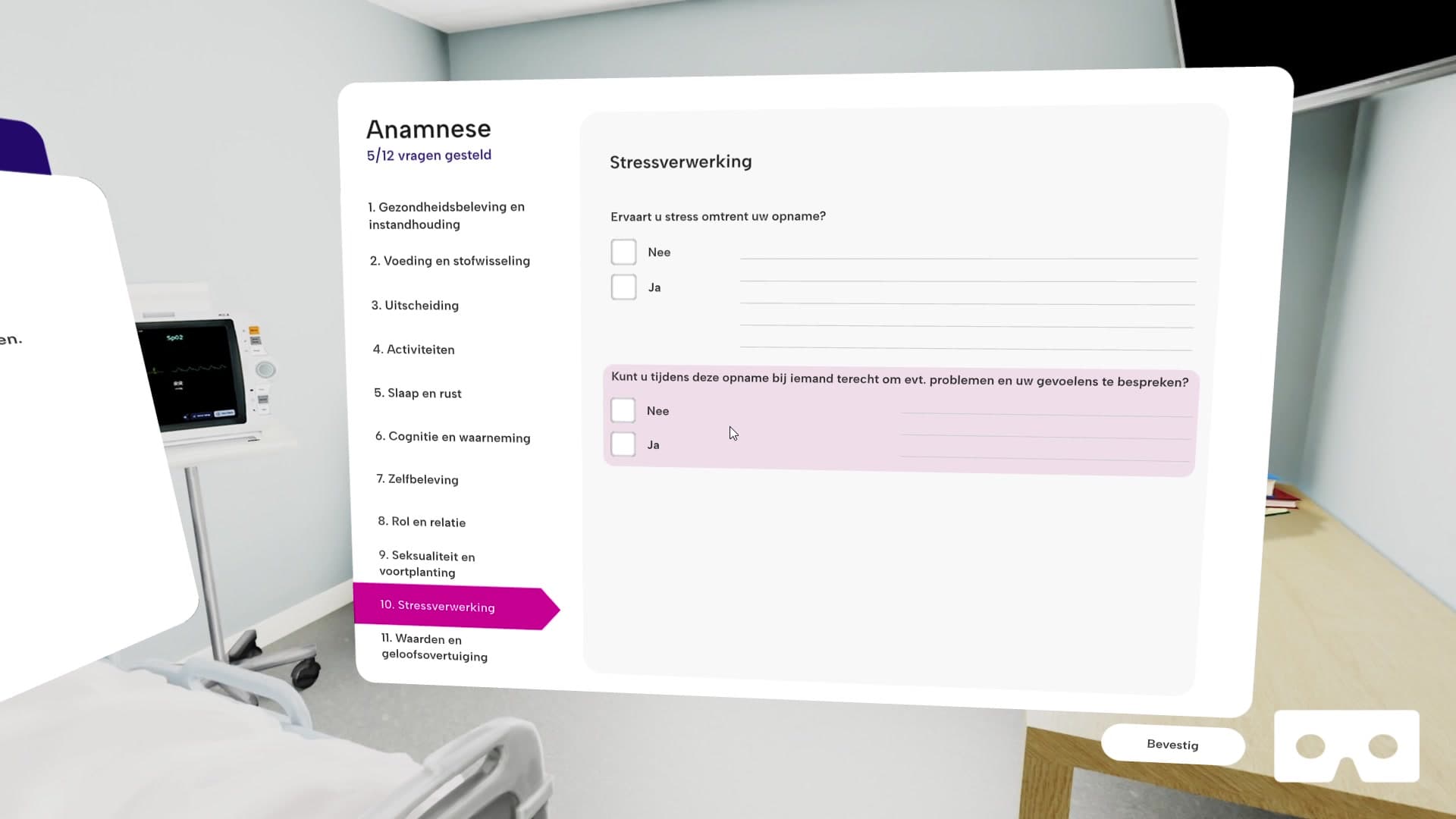
- Anamnese: The student picks questions to ask the patient, up to 12 total. Questions are scored by clinical relevance. Relevant choices score higher than semi-relevant ones.
- Heteroanamnese: A separate conversation with the patient's sister. Her answers are automatically added to the patient notes screen.
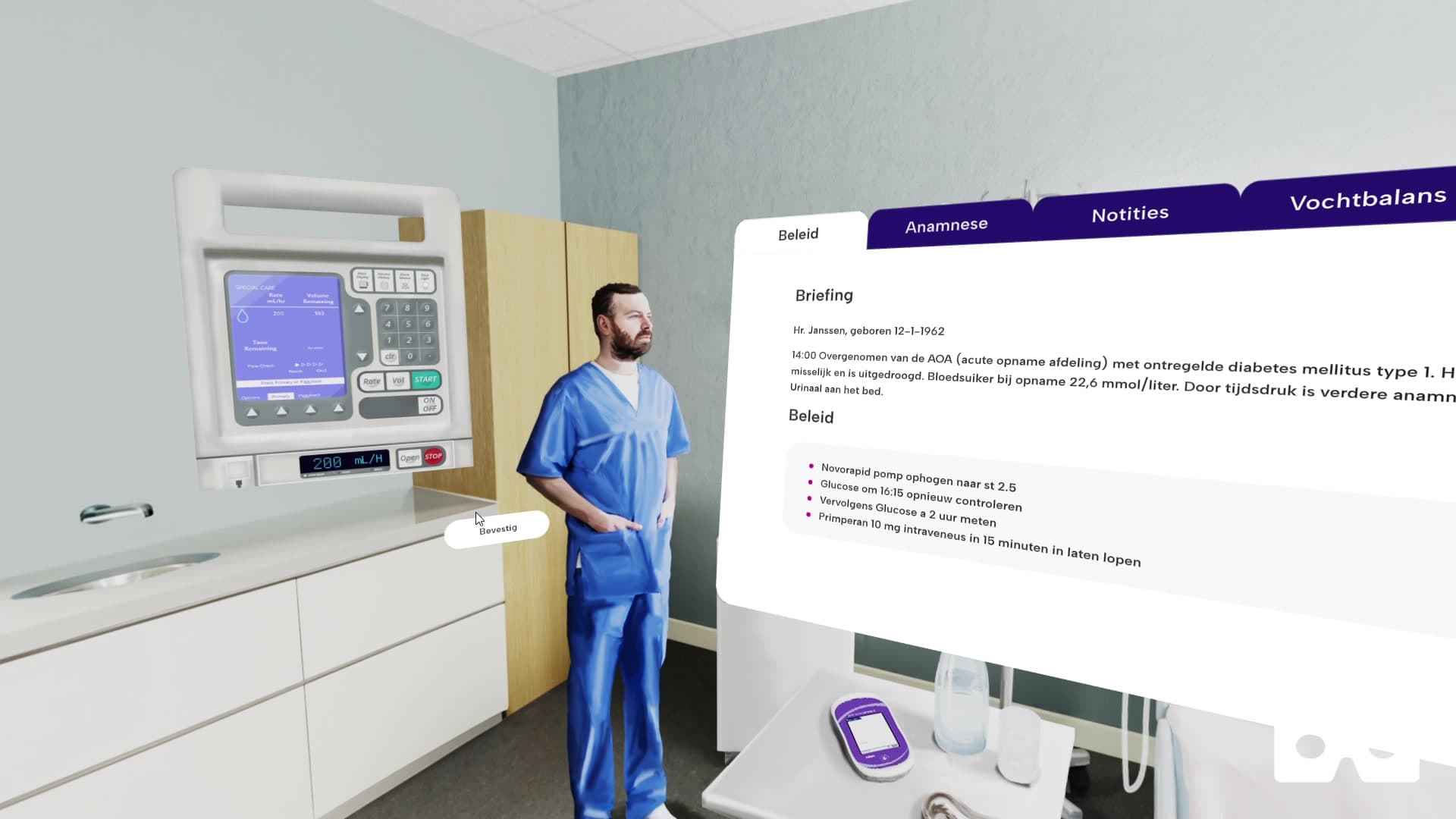
- Medical equipment: Each piece of equipment has a multi-step close-up interaction. Setting the Novorapid perfusor requires selecting the right ampoule and dialing in the correct rate. The Primperan is the most involved: pick the ampoule, draw the right dose in a syringe (with an animated plunger), select the correct infusion bag, then set the perfusor to the right rate. Each step validates before the next one unlocks.
- ABCDE assessment: A structured five-round multiple choice screen covering Airway, Breathing, Circulation, Disabilities, and Environment.
- SBAR handover: The student hands the patient over to the physician by selecting what to say across four rounds (Situation, Background, Assessment, Recommendation). The catch: only information the student actually collected during the scenario is available to select. If they never checked the glucose meter, that answer is grayed out.
Every interaction feeds into a weighted scoring system. Relevant choices earn 3 points, semi-relevant 1 point, wrong or skipped 0. Each category normalizes to a 0 to 10 score and the end screen breaks it all down.
Mouse and VR controller input are handled in parallel throughout, so the same interaction works identically on desktop or in a headset. Audio fades in and out using tween-based volume curves so ambient sound in the room never cuts abruptly.
Fig. 04 · Video
The heteroanamnese conversation with Mevr. Janssen, the patient's sister, gathering background the patient couldn't give himself.
03
The Result
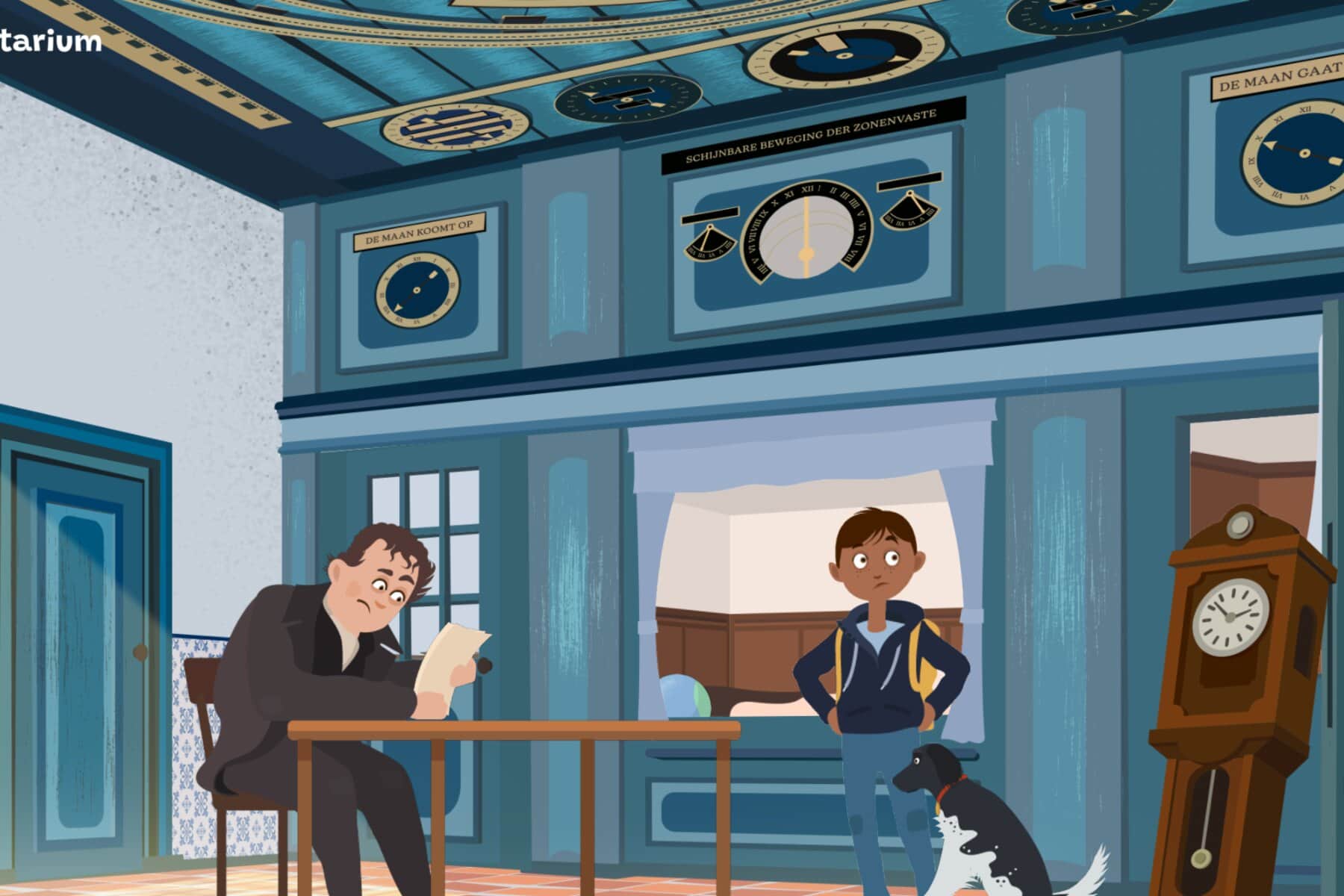
A browser-based WebXR simulation of a nursing shift with a Type 1 Diabetes patient (Dhr. Janssen, 62, admitted with decompensated blood sugar and dehydration), covering the full clinical reasoning cycle from intake to handover. Students can run through it on a laptop or with a VR headset. The illustrated 360-degree environment was made by a colleague at Enversed Studios. All development was done solo, October to November 2022, as part of Summa College's contribution to the StimulanZ project, an Interreg Vlaanderen-Nederland initiative on simulation-based learning in care education.
Live at klinischredenerenvp.summacollege.nl.
04
Outcome
The simulation has been in active classroom use since it launched and is still used in class today. It replaced a harder-to-repeat, teacher-driven activity with something students can work through at their own pace, see the direct consequences of their choices, and get scored feedback on every decision they made.
It was one of the more meaningful projects to build. Clinical reasoning is a real skill with real stakes, and making something that helps students practice it in a safe, repeatable environment felt worthwhile in a way that not every project does.
Stills


The anamnese lets students work through up to 12 interview topics with the patient. A counter tracks how many questions have been asked; each topic's relevance to the diagnosis determines its score.
03 / About
Concept first, medium second
I'm Ramon, a multimedia designer based in Eindhoven. Projects start with a problem: what the thing has to do, and how someone should move through it. The answer has been a 360 film, a VR walkthrough, an explainer animation, a configurator and an AI training platform.
My part is 3D, design and code: modelling and lighting in Blender, interface and motion in XD/Illustrator and After Effects, and the build in PlayCanvas or Next.js.