University of the Future
An interactive kiosk installation imagining the university 30 years from now.
01
The Brief
TU/e's Innovation Space was exploring what a university could look like in 2050, built around learners working together across disciplines instead of sitting in separate courses. For Dutch Design Week 2024 they wanted visitors to feel that idea in a few minutes, not just read about it, on a large touch table with several people playing at once.
02
My Approach
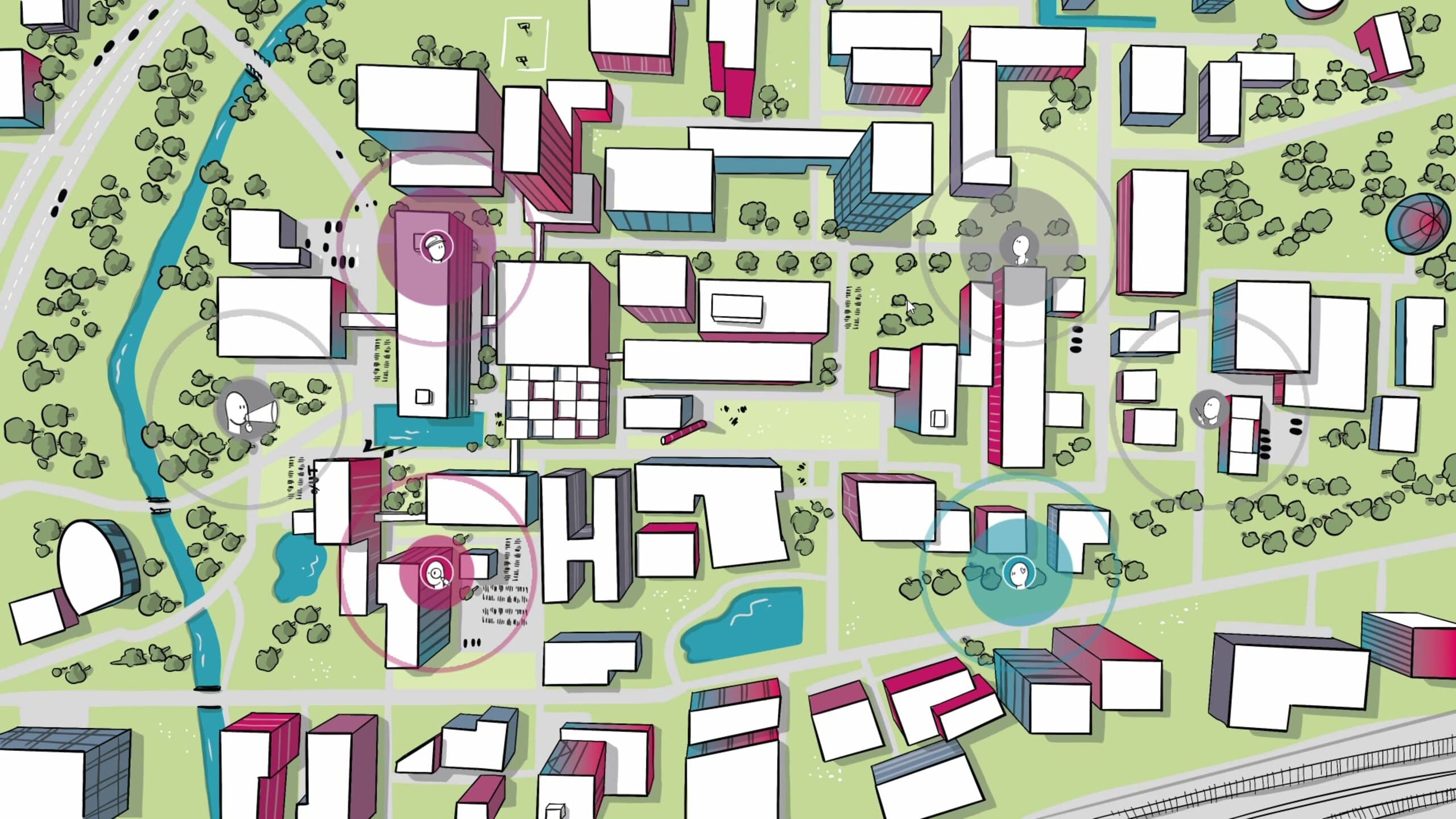
Each player gets their own panel, turned to face their side of the table, all running off one shared game. You pick a language, hear a short intro and choose what you're passionate about before a countdown runs out. Then you drag activity cards into a clock to decide how you'd spend your time on a real problem, like dementia care or climate change. At the end, everyone's choices light up on a shared campus map, with lines connecting players whose choices match, followed by a combined impact on a rotating globe. I built it solo, testing against the actual installation hardware instead of a desktop layout.
03
The Result
A round at the table takes about 6 minutes and ends with a QR code that invites players to continue the conversation about TU/e's future.
04
Outcome
The installation was shown at Dutch Design Week 2024 at the Enversed Experience Center. It was my first build for shared hardware with several people touching it at once, which changed how I think about layout, syncing and pacing across panels.
Video · 1 clip
Fig. 04 · Video
Choices lighting up the shared campus map, with lines between players.

03 / About
Concept first, medium second
I'm Ramon, a multimedia designer based in Eindhoven. Projects start with a problem: what the thing has to do, and how someone should move through it. The answer has been a 360 film, a VR walkthrough, an explainer animation, a configurator and an AI training platform.
My part is 3D, design and code: modelling and lighting in Blender, interface and motion in XD/Illustrator and After Effects, plus the build in PlayCanvas or Next.js.