Ramon Hoffman

OntZORGt

A WebXR 360° home-visit simulator for Dutch healthcare training, built as a reusable framework so colleagues can add new care scenarios without touching code.

01

The Brief

OntZORGt Coaching en Educatie trains Dutch care workers to recognize early warning signs in home visits: things like confusion, missed medication, or a client quietly struggling to manage on their own. That's hard to teach from a slide deck. The brief was a VR training where care workers could practice a full home visit against a realistic client, in a format accessible enough to run in a browser but immersive enough to work on a VR headset. It had to serve several distinct roles, each with a different job to do in the home: informal caregivers, care workers doing personal care, practice nurses doing clinical checks, and guidance workers. And critically, it couldn't be a one-off: the client needed to keep adding new training scenarios after launch without needing a developer every time.

02

My Approach

I built the base framework the whole project runs on, which my colleagues then used to build and extend new training scenarios on top of. Players choose one of four caregiving roles and visit the home of a fictional elderly client, Mevrouw Chong, navigating between rooms shot as 360° photo spheres and interacting with hotspots to have conversations, examine details, and complete tasks. It runs in a regular browser on desktop and in VR on Meta Quest headsets via WebXR.

A lot of the work went into making the framework something colleagues could actually build on without writing code. Each scenario is authored as a JSON script: a flow of conversation steps, image close-ups, and events, wired together with dependencies (this hotspot only appears once that one is done, this one disappears once the client changes position) and gated by mandatory-scene locks so a player can't wander off mid-task. Feed in a new JSON file and you get a new scenario.

The other big focus was performance and reliability in VR, where a stutter or a broken texture is a lot more noticeable than on a flat screen. I built a custom asset loader that reads every scene's JSON at boot to build a map of what each scene needs, then loads and unloads those assets per scene instead of keeping everything in memory. Before fading a new 360° sphere in, it polls the texture until it's actually ready, so players never see an untextured environment. I also wrote a dialogue UI system and a set of reusable, multi-purpose hotspots that could serve conversation, examination, or navigation depending on how a scenario's JSON configures them, rather than needing bespoke hotspot types per scenario.

Fig. 03 · Video

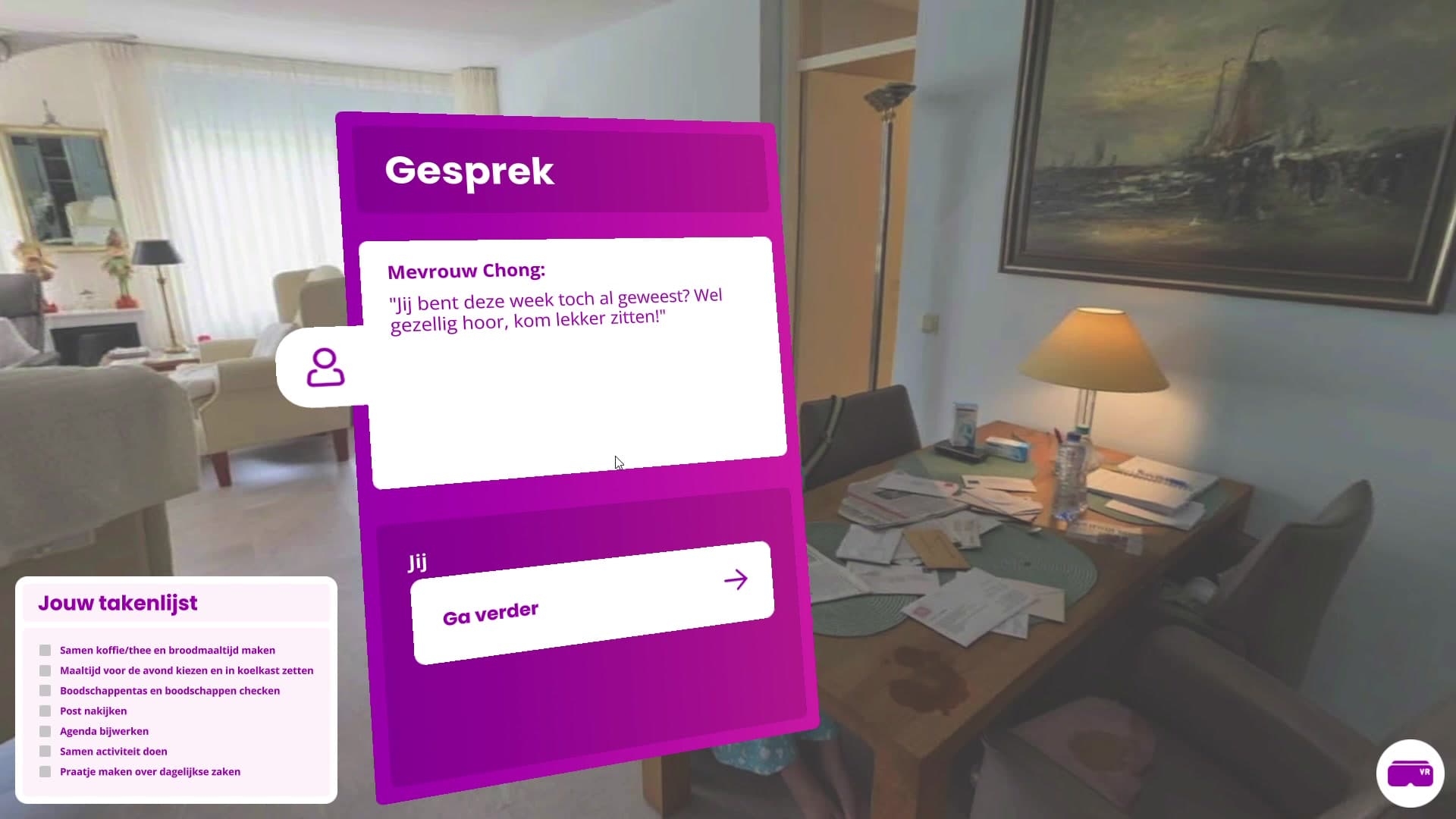
A conversation with Mevrouw Chong, the client every scenario is built around.

03

The Result

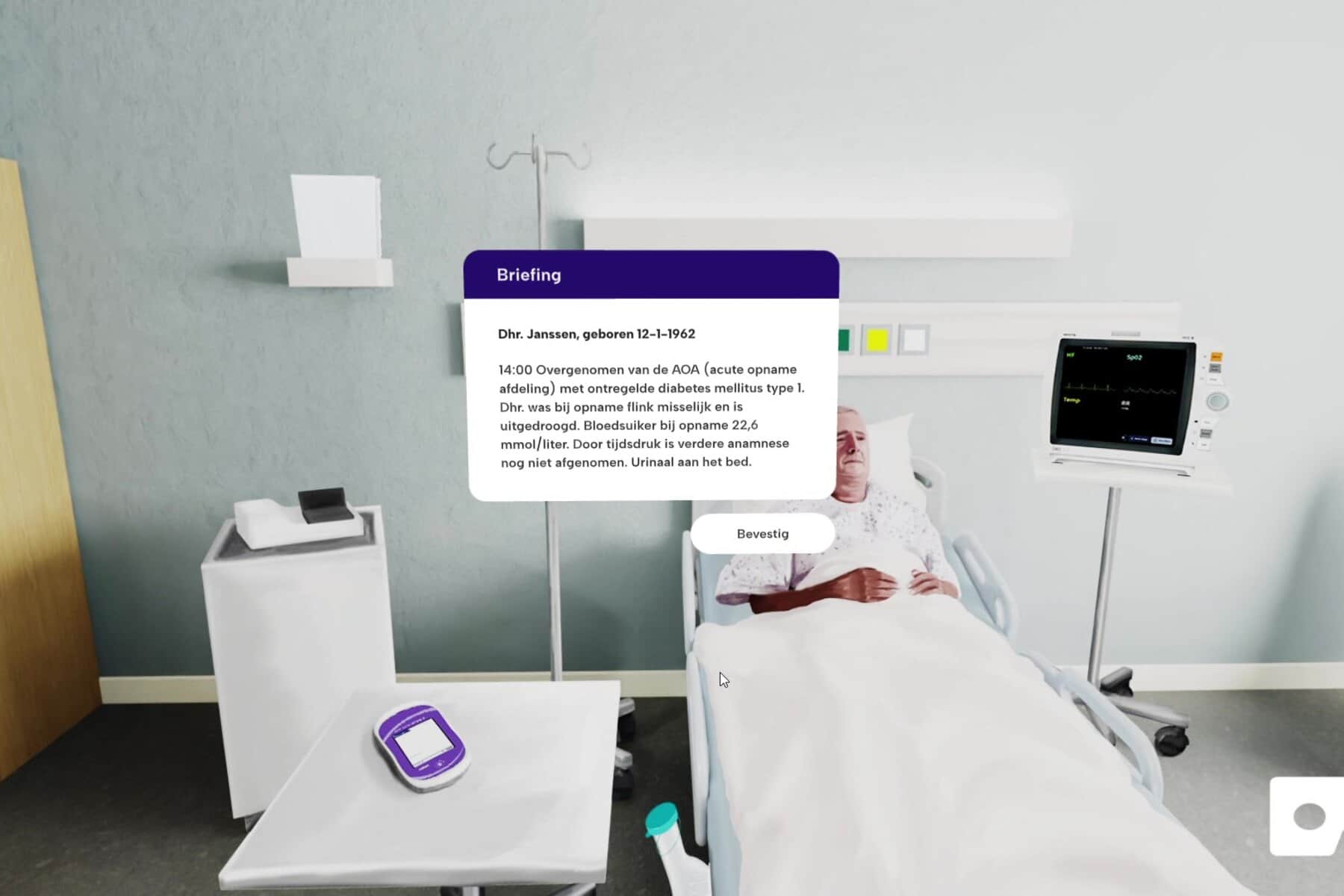
A WebXR training platform with four playable roles, each walking through a different home-visit scenario in Mevrouw Chong's house: a caregiver's social visit, a care worker's showering and observation routine, a practice nurse's structured clinical assessment, and a guidance worker's check-in. Rooms are built from 360° photo spheres that change state as tasks are completed, and every interaction runs through the same hotspot and dialogue framework so new scenarios can be authored without code changes. It runs on desktop browsers and Meta Quest headsets.

04

Outcome

OntZORGt is live and in use in care worker training. Since finishing the base framework, colleagues have used it to keep adding scenarios, which was the actual goal: the platform staying alive past the initial build instead of needing a developer for every new training. Going deep on VR-specific performance work (scene-scoped asset loading and unloading, texture-ready gating, deferred entity destruction to avoid WebXR input crashes) was new territory for me, and it changed how I think about building for VR generally: a lot of what feels like "polish" in VR is really about avoiding the small stutters and glitches that break immersion in a way they wouldn't on a flat screen.

Stills

01 / 02
A branching conversation with Mevrouw Chong, the client every scenario is built around.
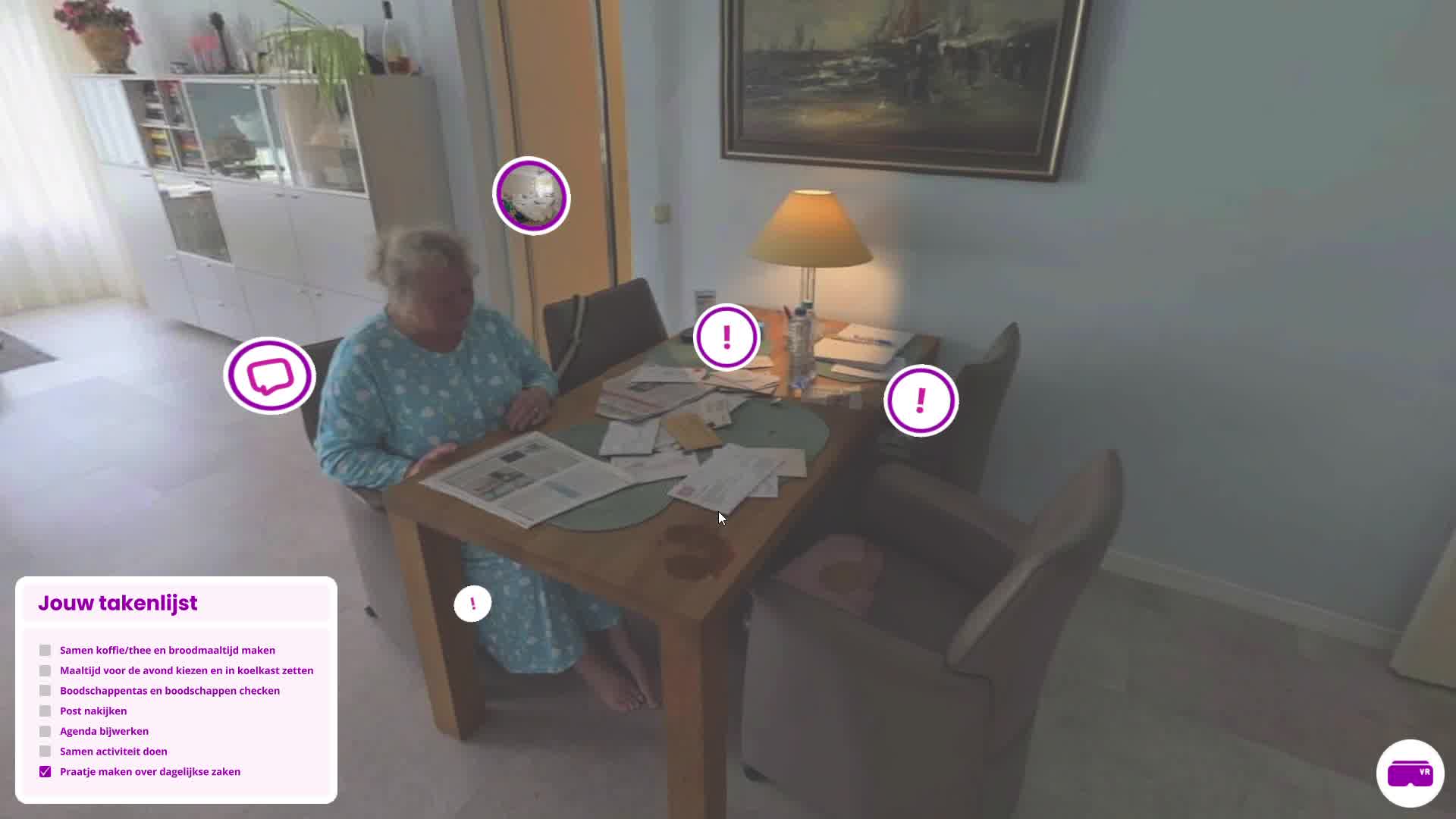
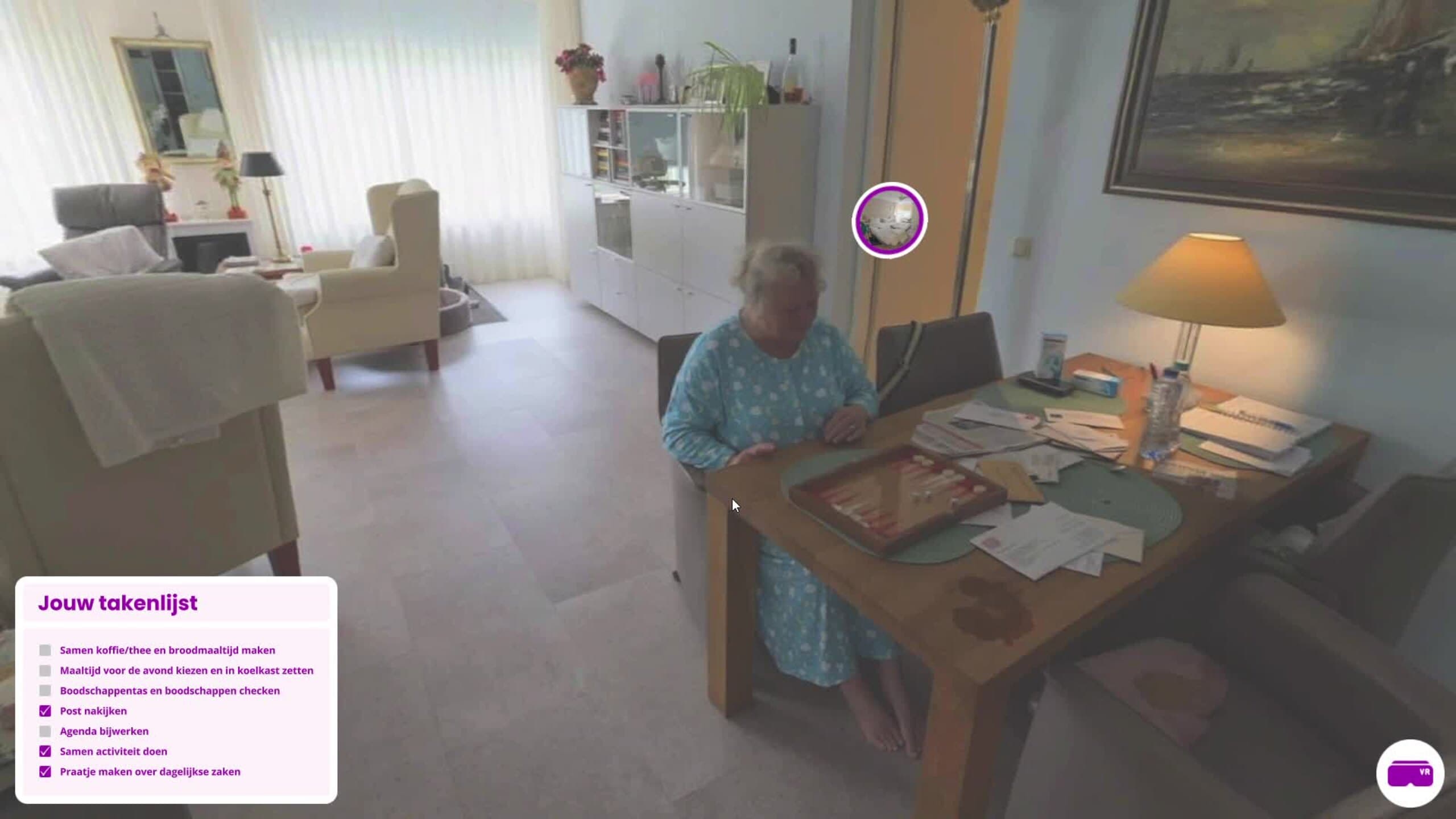
The three hotspot types in one shot: conversation, examination, and room navigation, plus a completed task on the checklist.

A branching conversation with Mevrouw Chong, the client every scenario is built around.

Ramon Hoffman, Multimedia Designer / 3D Artist / Web Developer

03 / About

Concept first, medium second

I'm Ramon, a multimedia designer based in Eindhoven. Projects start with a problem: what the thing has to do, and how someone should move through it. The answer has been a 360 film, a VR walkthrough, an explainer animation, a configurator and an AI training platform.

My part is 3D, design and code: modelling and lighting in Blender, interface and motion in XD/Illustrator and After Effects, and the build in PlayCanvas or Next.js.