Murder Mystery
An AI interrogation game where you question four suspects out loud to solve a murder, rebuilt in 2026 into a reusable scenario platform.
01
The Brief
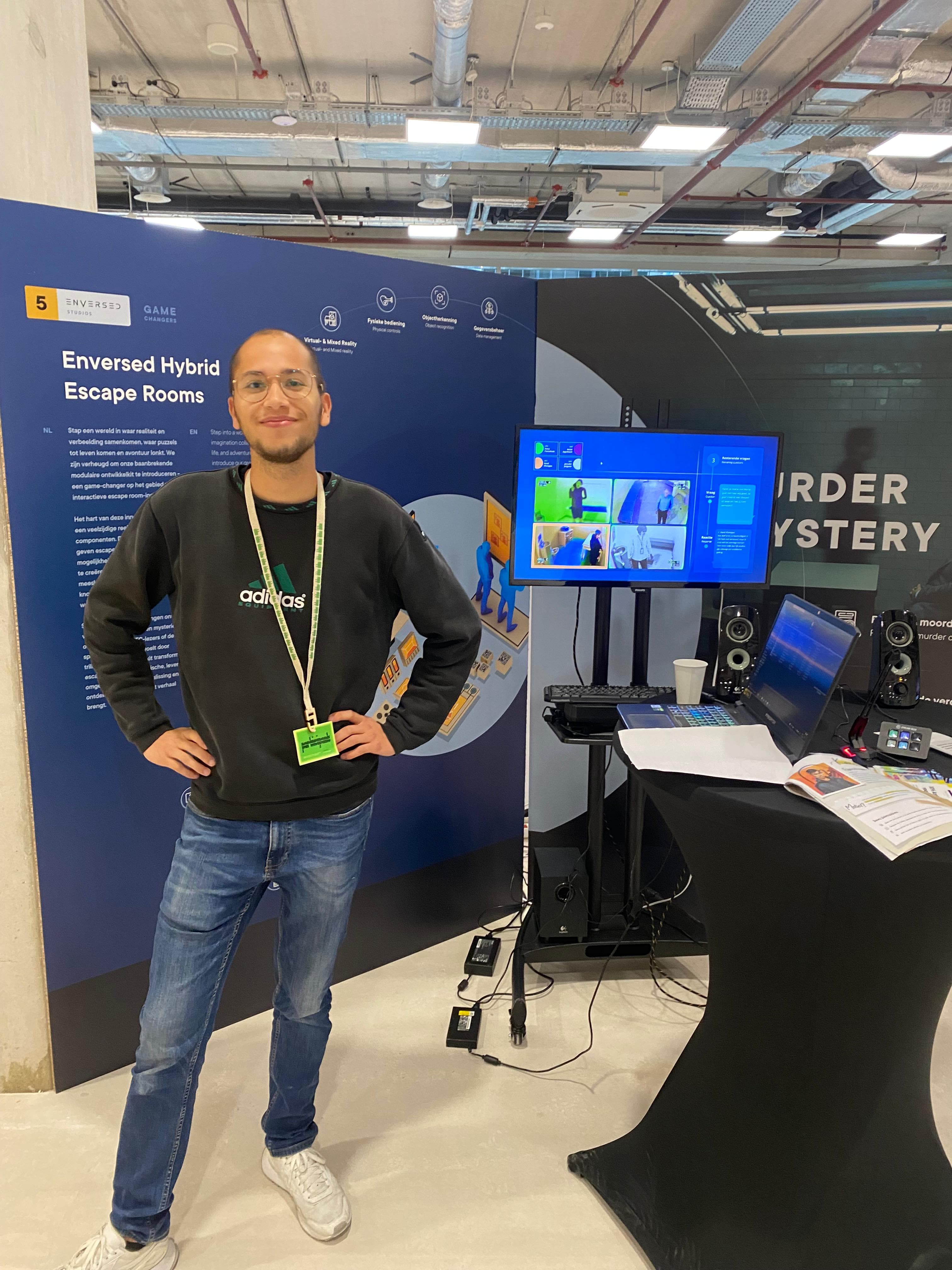
Every year Enversed Studios presents itself at Dutch Design Week, and for the 2023 edition we wanted to show that we work with AI, at a moment when that was still brand new: ChatGPT was less than a year old, and almost nobody had experienced a game character you could genuinely talk to. So that became the showcase, and I built it in a few weeks, just in time for the event.
The story even takes place at Dutch Design Week itself. Inventor Vincent Valentino was about to unveil a revolutionary energy source at the event when he was found dead, poisoned with nightshade. Visitors playing the game were solving a murder set at the very fair they were standing in.
02
My Approach
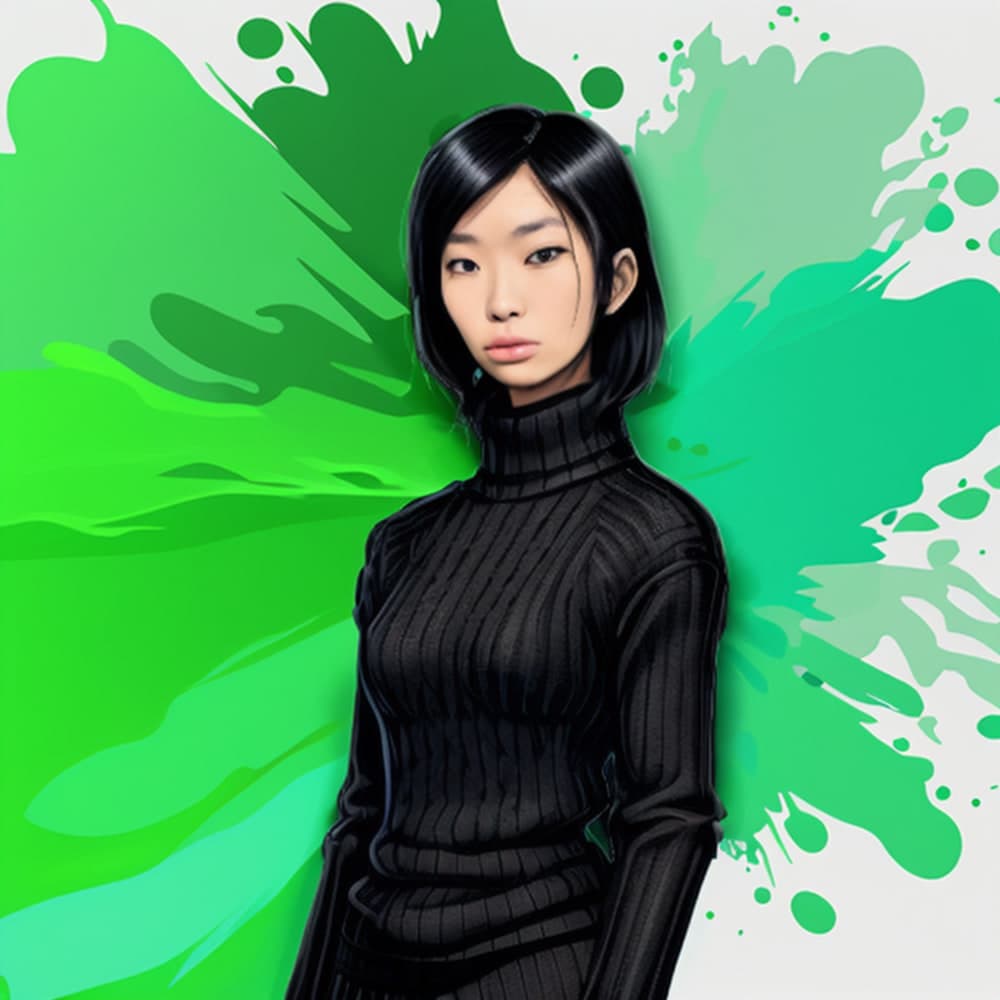
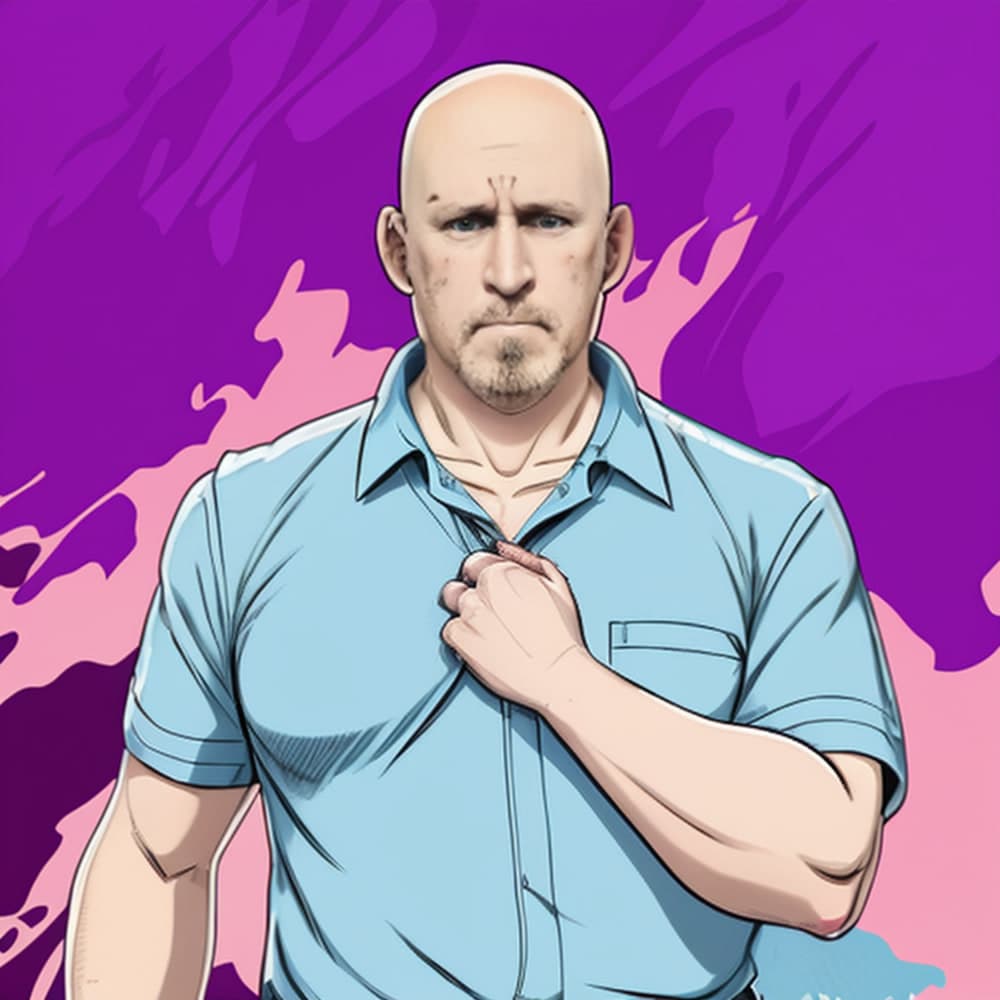
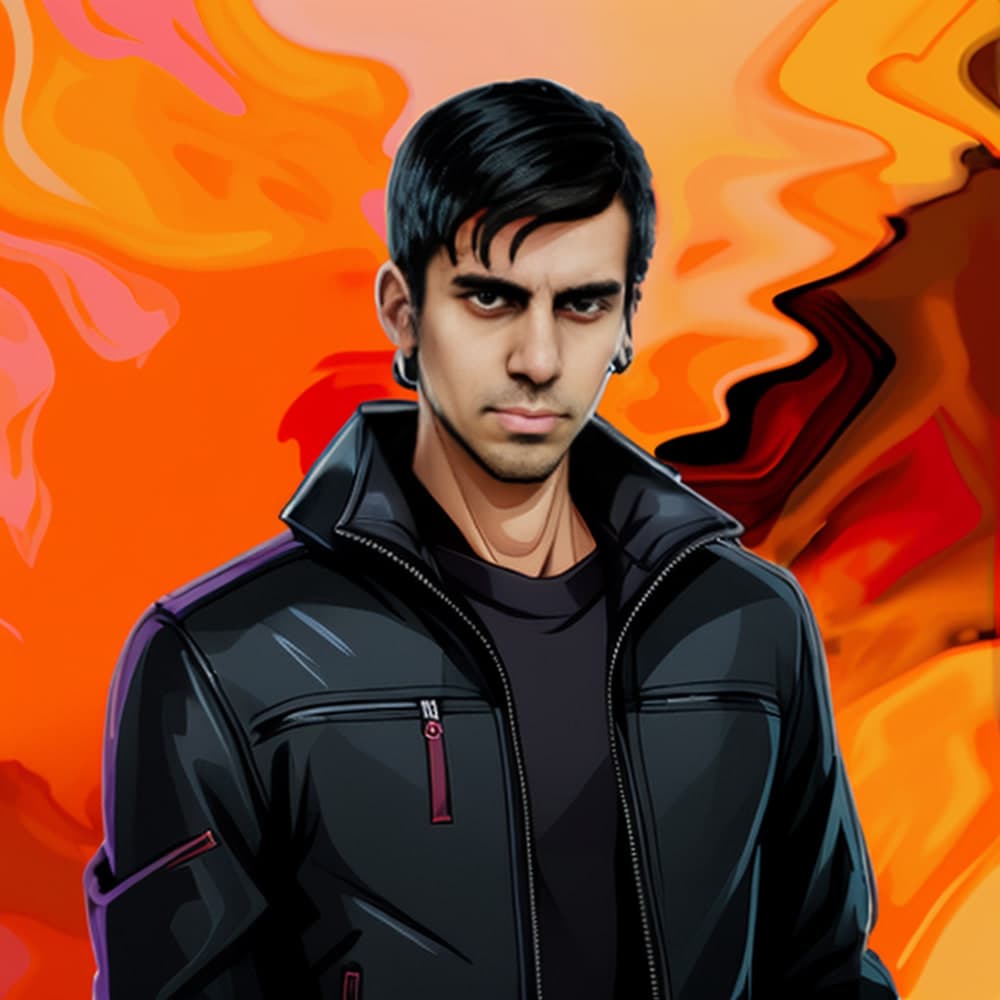
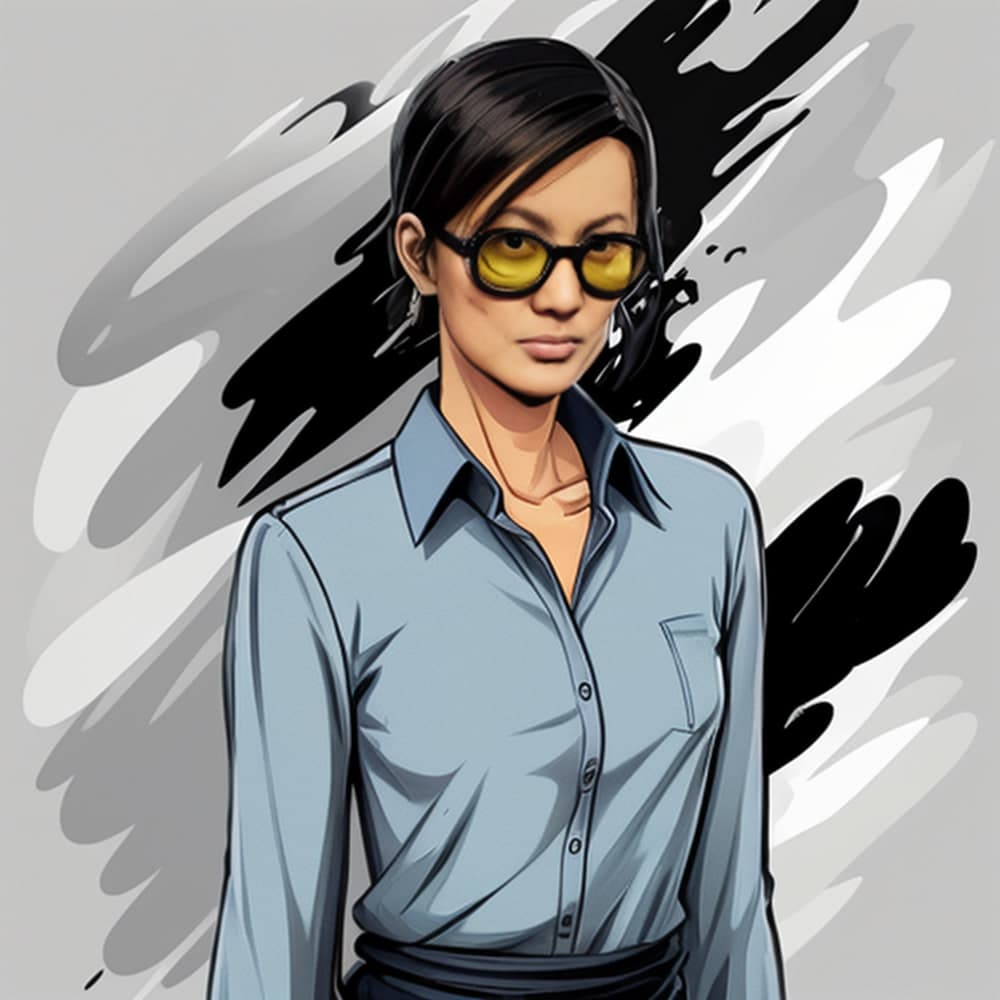
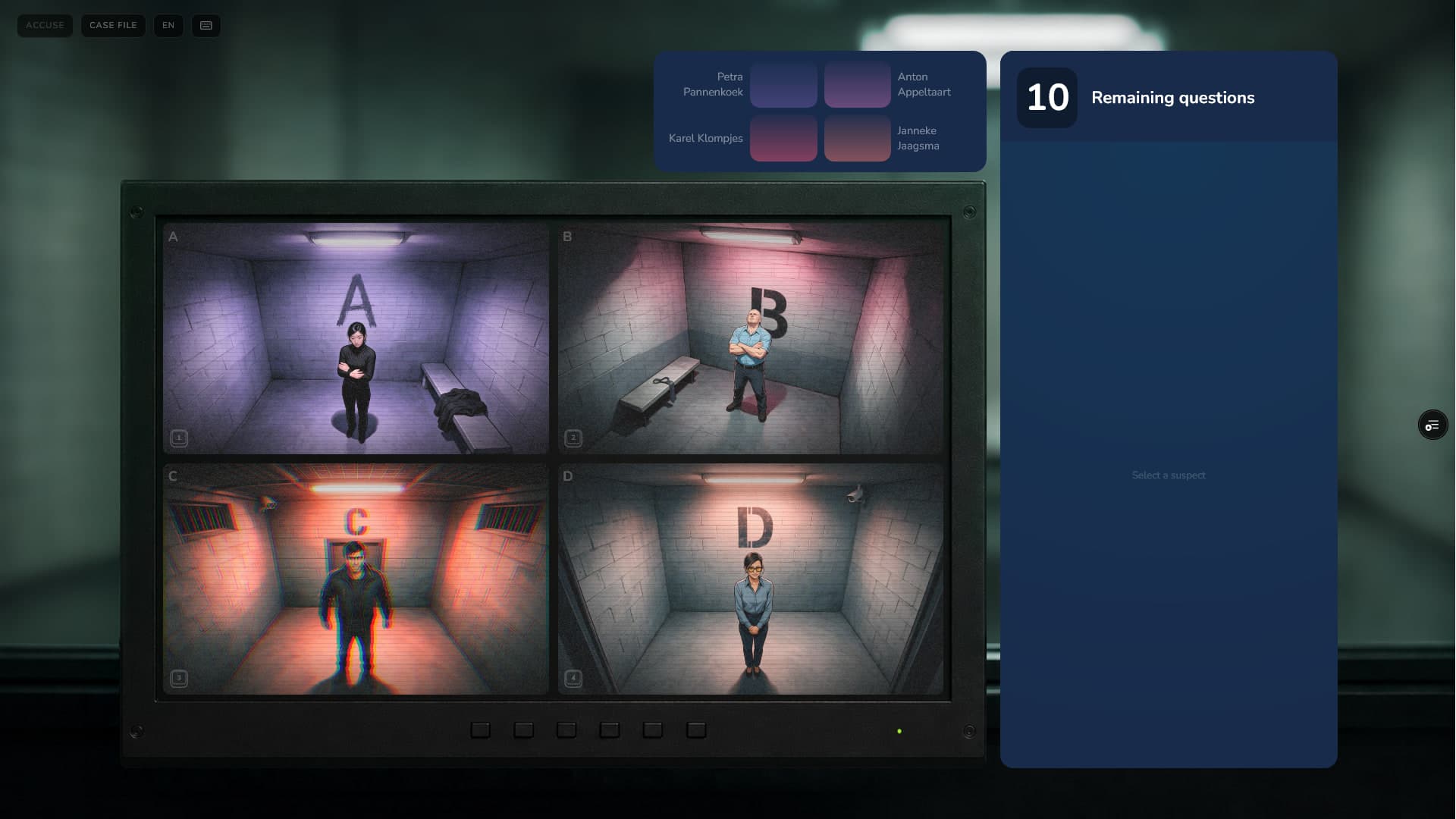
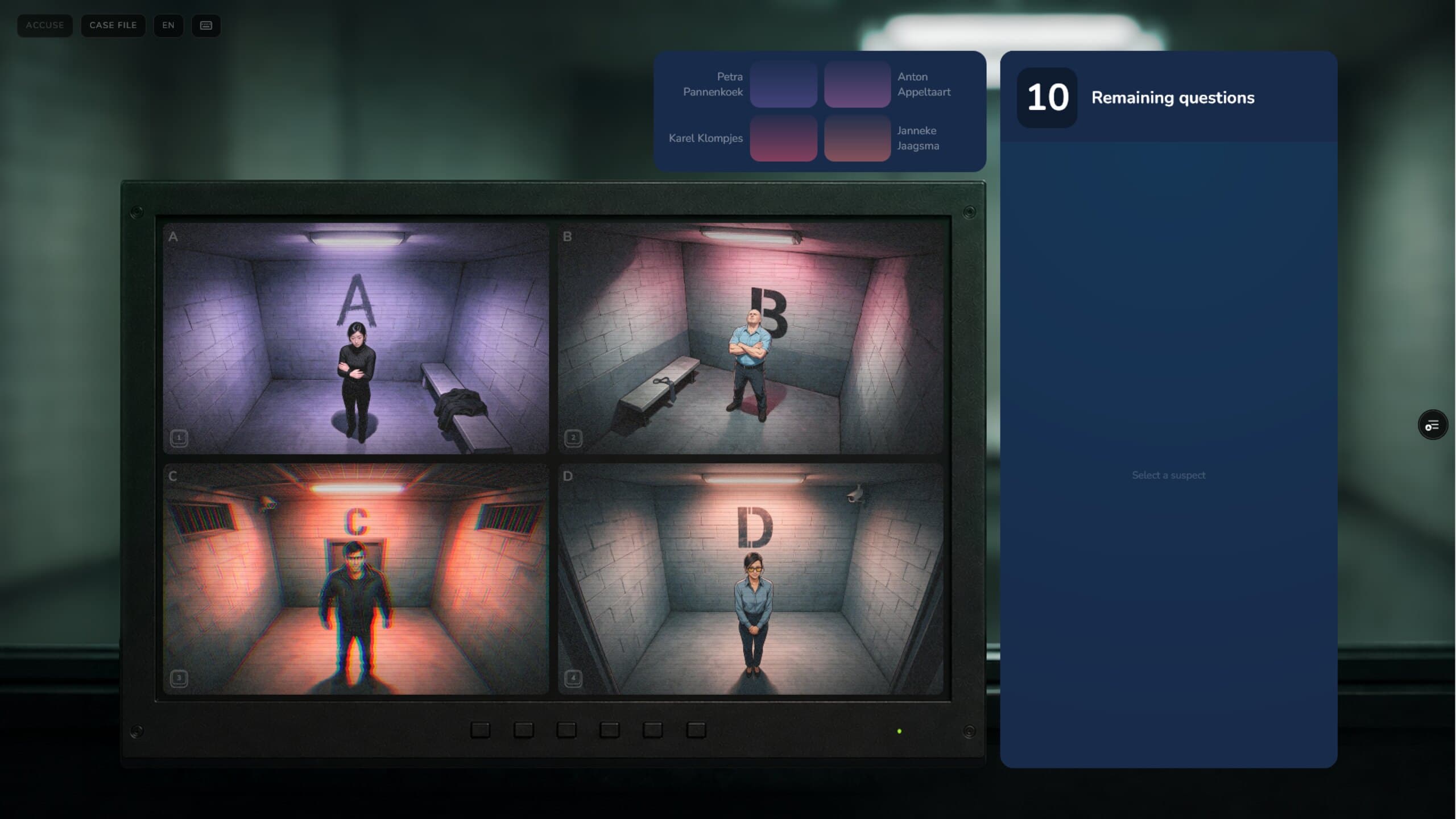
The concept is a classic whodunit. A briefing sets the scene: four suspects have been arrested, each with a motive, and you are the detective. On screen you watch them pace around their holding cells through security-camera feeds: Petra Pannenkoek, Anton Appeltaart, Karel Klompjes and Janneke Jaagsma. You get 10 questions to spend across them however you like, then you have to point at the killer.
There is no dialogue tree. Each suspect is an AI character with their own backstory, personality and secrets, so you can ask literally anything and they answer from their own perspective. They lie, they manipulate, they accuse each other, and occasionally they let a hint slip. We wrote the characters together with SkillFull, a company focused on prompting with real psychological knowledge; I directed the writing, they grounded each personality in an actual psychology model, so every suspect cracks under pressure in their own way.
Questions are asked out loud. You hold a suspect's button, speak, and release. The recording goes to OpenAI Whisper to be turned into text, the text goes to GPT (running on Azure) which answers in character, and that answer goes to ElevenLabs, which speaks it back in the suspect's own voice. The voices were cloned from my colleagues and me. Three AI services chained per question, and it has to feel like one conversation. Typing works too: both input paths feed into the same pipeline, so the game plays the same with a keyboard as with a microphone.
The part I'm most fond of is that the suspects visibly react. Every answer from the AI includes not just the reply but also an emotional state and a stress level, and those drive which video clip plays in their cell: calm, emotional, and if you pressure a suspect hard enough, a confession clip where they break down. To make that reliable I forced the AI to always answer in a fixed, machine-readable format. In 2023 there was no built-in option for that yet, so I used a workaround (function calling) plus fallback layers for when the model rambled anyway.
Building with AI this early came with odd problems. Azure's content filter would block player questions for containing words like "murder", which is inconvenient in a murder mystery, so the game quietly swaps those words for harmless synonyms before sending them. And since tuning AI characters is endless, the suspect personalities load from a config file on our server at startup, so I could rewrite their backstories without republishing the game.
The game also had to survive an event floor. The physical setup was a Stream Deck with a button per suspect, a separate microphone, and an external monitor. The game restarts itself 15 seconds after every round, and holding two hidden keys for 5 seconds gives staff a manual reset without anyone noticing.
My colleague handled the design, the suspect videos, and the printed dossiers; I did all development.
03
The Result
A single-player interrogation game of around 10 minutes, in Dutch with a language switch built in, running unattended as an installation. Visitors walk up, read the case, question four suspects by voice, watch them get nervous, and accuse one. Guess right and you win; guess wrong and the killer walks.
04
The Rebuild
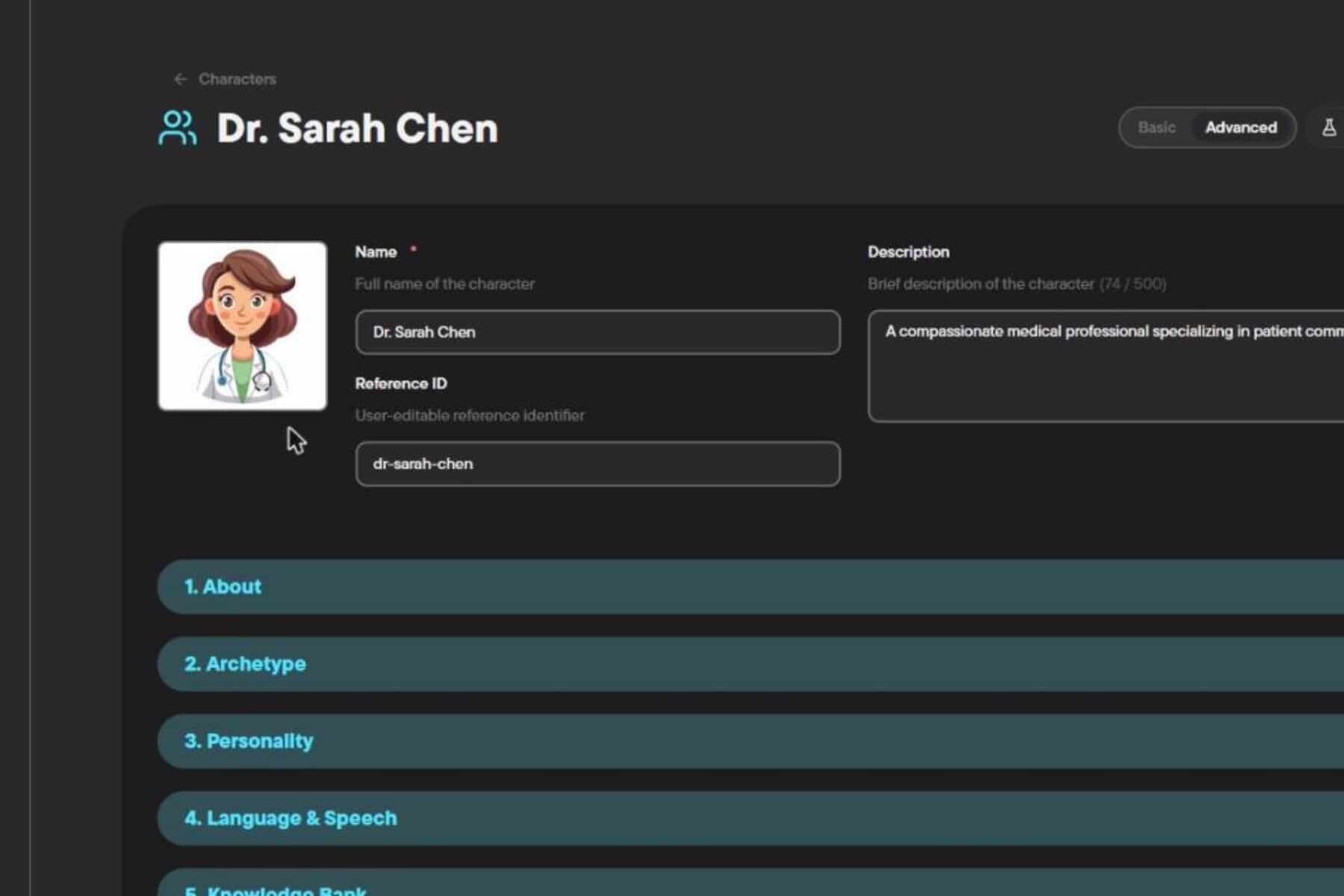
Almost three years later, in August 2026, I rebuilt the whole game from the ground up in a few days, this time as a Next.js application instead of a PlayCanvas script pile. The original was a one-off, built for a single event and never touched again once it shipped. The rebuild turns it into a platform: there's now an admin dashboard where the victim, setting, timeline, suspects, their prompts and their voices can all be written and edited without touching code, and the same engine can publish more than one scenario at once. It's still an internal tool, but it means Enversed can now point Murder Mystery at a new case, for a new client or event, without a developer rebuilding it from scratch every time.
The AI pipeline itself got faster and more solid. Speech-to-text, the character's reply, and the voice synthesis now each run through their own API route instead of one shared third-party proxy, and the AI's reply is forced into a guaranteed structured format with proper function calling, no more layered fallback parsing for when the model rambled. Audio now streams in as it's generated instead of waiting for a full clip to render, which brought the wait before a suspect starts speaking down from three to four seconds to about one.
The suspects look different too. Instead of live-action footage, each one now sits on a stylised CCTV feed built from layered scanlines, grain, flicker and chromatic aberration, with a visible glitch whenever their mood shifts. And unlike the original, the game now grades you afterwards, scoring every question you asked and rating how good it actually was.
Stills


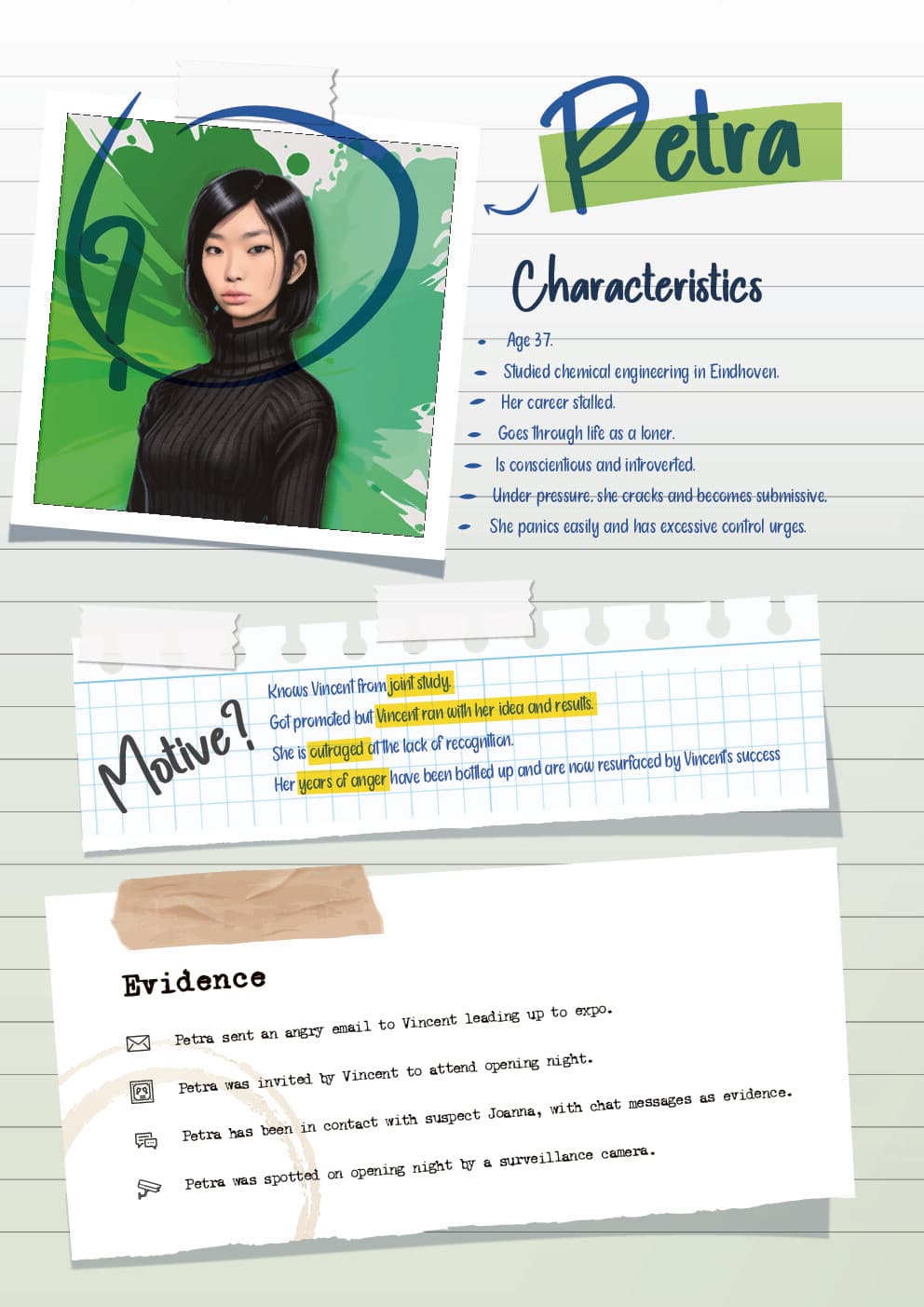
A page from the suspect dossier my colleague designed: Petra's characteristics, her possible motive, and the evidence against her. Each suspect had a profile like this, which also fed their AI persona.
05
Outcome
The game ran at Dutch Design Week 2023 and people genuinely wanted to play it. Young visitors, older visitors, everyone got invested, and the reaction that kept coming back was amazement that the characters could actually talk back and hold a real conversation. Afterwards the game was adopted by Enversed Experience Center (previously Enversed Entertainment), where it is still installed and playable today, and it returns to Dutch Design Week every year as part of the Enversed showcase.
For me this was the project where I used AI for the first time. It was new, I wanted to explore it, and I ended up building a speech-to-text, language model, text-to-speech pipeline from scratch. That pipeline became the foundation for a whole series of AI projects Enversed took on afterwards.
The 2026 rebuild isn't public either, it currently runs internally at Enversed. But rebuilding it in a few days, three years after the original took weeks, is its own kind of takeaway: how much faster and more solid this kind of AI pipeline has become to build, and how much I'd learned about it since the first attempt.
03 / About
Concept first, medium second
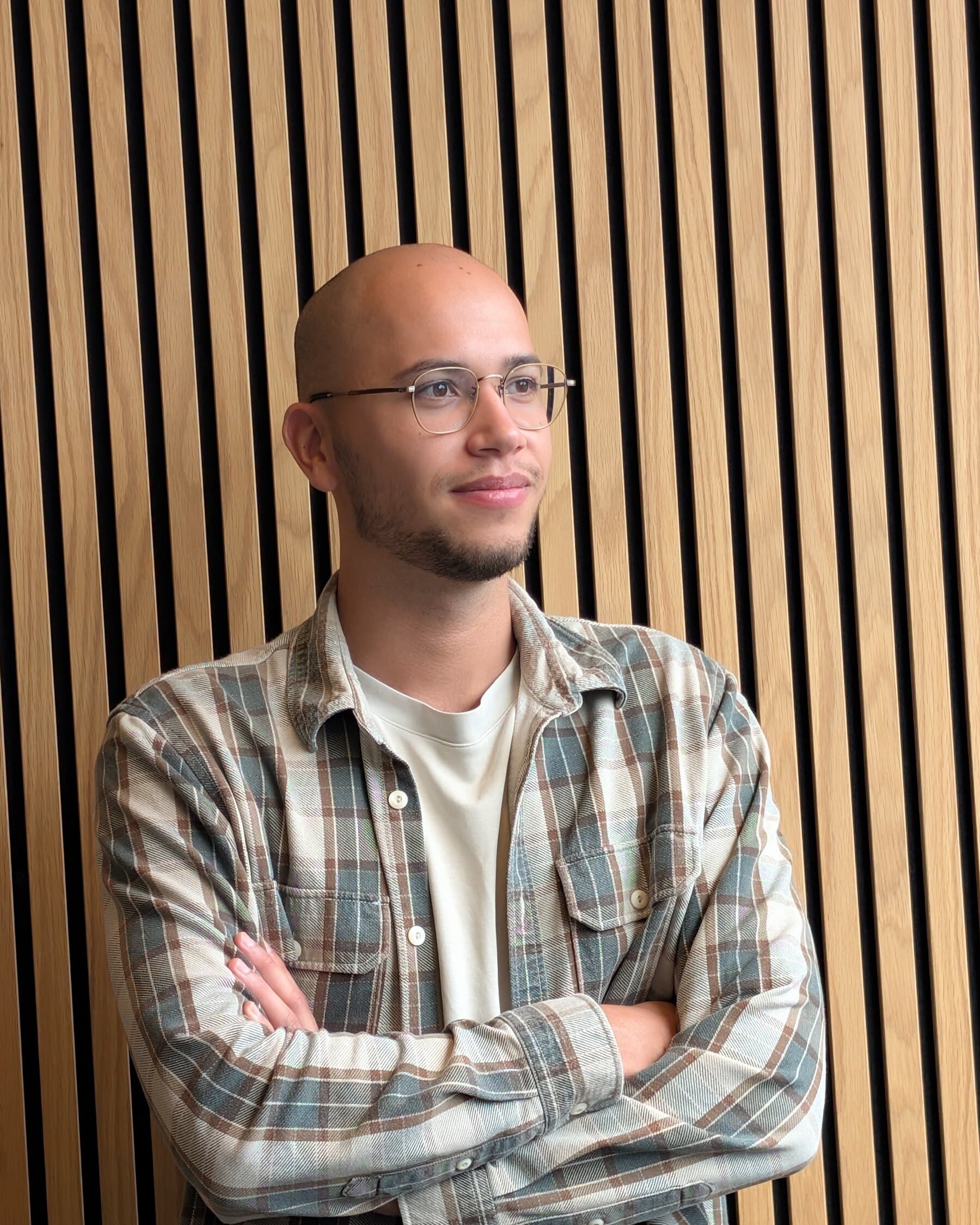
I'm Ramon, a multimedia designer based in Eindhoven. Projects start with a problem: what the thing has to do, and how someone should move through it. The answer has been a 360 film, a VR walkthrough, an explainer animation, a configurator and an AI training platform.
My part is 3D, design and code: modelling and lighting in Blender, interface and motion in XD/Illustrator and After Effects, and the build in PlayCanvas or Next.js.